


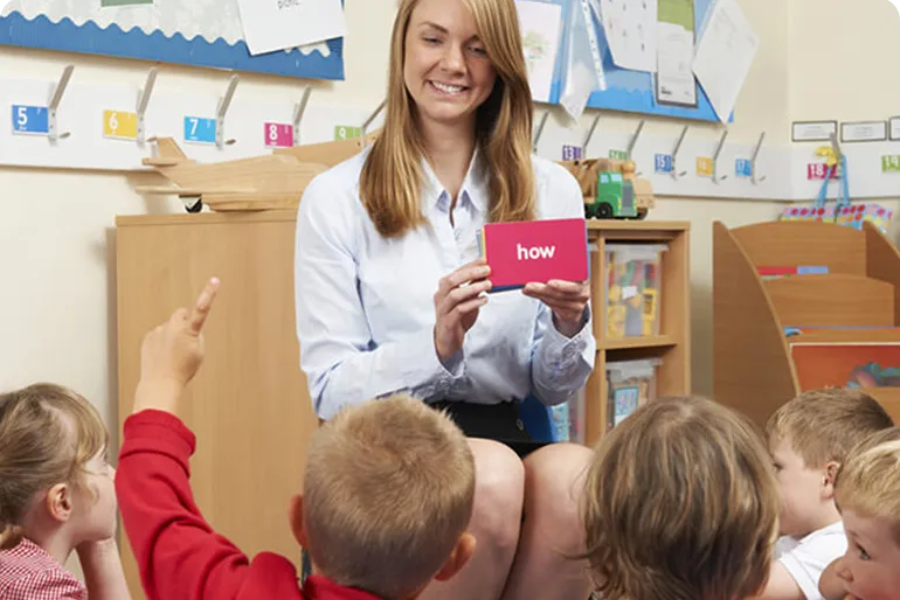
Phonics Ideas for Kindergarten to Teach
Source: istockphoto
Phonics Ideas for Kindergarten to Teach
Teaching young learners to read becomes easier when teachers use creative Phonics Ideas for Kindergarten that build strong letter–sound understanding. Kids learn best when they can play with things and practice them. The appropriate tactics help kids link sounds, letters, and words with confidence. Teachers can make Phonics practice fun for all kids and help them learn to read by implementing fun Phonics Ideas for Kindergarten.
Table of Content
3 must-do Practices for Teaching Phonics
Teaching Phonics becomes far more effective when children receive steady practice, hands-on experiences, and gentle support. These three must-do practices help young learners build strong reading foundations with confidence and curiosity.
Here are three must-do practices for teaching phonics in a clear, simple way:
Practice sounds and blending consistently
- Regular practice with sounds is the base of strong phonics skills.
- Start with individual letter sounds and help children hear them clearly.
- Show how to blend sounds together to read simple words like cat, mat or ship.
- Kids who already know fundamental sounds like sh, ch, and th should be taught mixes like st, cr, and bl over time.
- Give young kids letter tiles, flashcards or blocks to play with while they read and write words.
Use multisensory and engaging methods
- Kids recall things better when they employ more than one sense.
- Put in games that help kids learn, like word searches, sound bingo and matching pictures to sounds.
- Kids can draw letters while saying the sound out loud in sand, rice or on cards with different surfaces.
- To connect sounds to real-life events, use real things (a shoe for /sh/ or a cup for /c/) and short, easy stories.
- This playful approach makes learning enjoyable and stress-free rather than difficult.
Provide daily, structured practice with gentle guidance
- Long, broken up lessons don’t work well as short, steady practice.
- Give youngsters 10 to 15 minutes a day to learn so they can stay on track.
- Go over the sounds you’ve already taught quickly before adding a new one or a new routine.
- When kids makes mistake, repeat the word correctly and encourage them to try again, instead of stopping them sharply.
- Offer praise for effort as well as correct answers, so learners build confidence along with skill.
Together, these practices help children understand letter–sound relationships, read more fluently, and stay positive about Learning Phonics.
For downloading the brochure of Phonics Course, Click Here!
Call or Whatsapp on +918104606573 / +919869866277, for more details of Phonics Course!
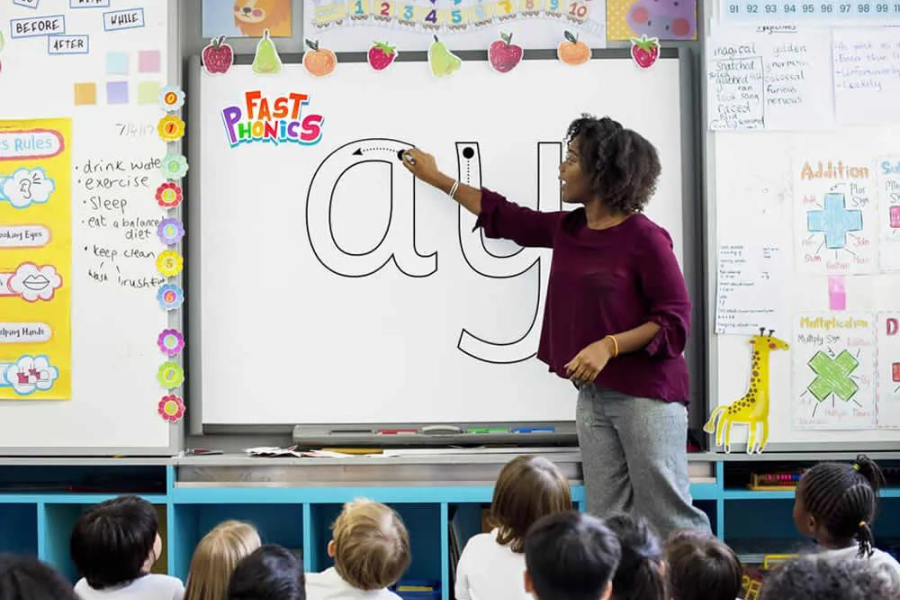
Source: readingeggs
How to Make Phonics Fun for Kindergarten?
Making Phonics Fun helps kids remember how letters and sounds work together and keeps them interested in learning. When lessons include fun activities and creative exercises, phonics stops feeling like a chore and begins to feel like a natural, fun part of the day.
Fun Ways to Teach Phonics in Kindergarten
Turn phonics into games
- Have fun with matching games, sound bingo, or sound hopscotch.
- Put picture cards throughout the room and let the kids go on a “sound hunt.”
- Make practicing fun by using spinning wheels or dice with letters and sounds.
Add movement and action
- Ask children to jump, clap, or stomp when they hear a specific sound.
- Use action cards that have an easy movement for each sound. For example, /s/ means “slither like a snake.”
- Give children steps based on the sounds in words to create sound trails for them to follow.
Bring in multisensory activities
- Let kid’s form letters with clay, sand or textured materials.
- Use of salt trays or finger-painting for tracing letters as they say the sound.
- Try “sound baskets” filled with small objects beginning with the target sound.
Use songs and rhymes
- Kids can remember sounds better when they sing simple learning songs.
- Use known words to make short lines that rhyme to help kids remember patterns.
- Getting youngsters to sing along or make up their own crazy sound songs.
Connect phonics to everyday moments
- During story time or when identifying things around the room, point out noises.
- Use simple stories where the main character highlights the sound of the day.
- Let kids share objects from home that begin with the weekly sound.
With the correct mix of play, interaction and creativity, phonics becomes an enjoyable learning experience that builds confidence and early reading skills.
For downloading the brochure of Phonics Course, Click Here!
Call or Whatsapp on +918104606573 / +919869866277, for more details of Phonics Course!

Kindergarten Phonics Teaching Resources
When instructors utilize simple, fun and kids-friendly materials, it is easier for them to teach phonics well. With the right materials, kids can do hands-on and visual tasks to learn sounds, how to mix words, and how to read with confidence. Kindergarten Phonics resources should help kids practice every day and make the activities fun and useful.
Useful Kindergarten Phonics Teaching Resources
Flashcards and picture cards
Flashcards with letters, digraphs and picture cues help kids connect sounds to visuals. Picture cards are especially helpful for introducing new sounds and reviewing previously learned ones.
Letter tiles and magnetic letters
These help kid’s form words, move letters around, and learn blending with their hands. This hands-on method helps people remember things better and makes it easier to understand how to create words.
Phonics worksheets and activity books
Kids can build their organization skills using simple worksheets with activities like drawing, matching, and identifying sounds. Exercise books can also be used for small tasks or everyday classroom work.
Phonics games
Sound bingo, card matching, and board games are all fun methods to practice while going over important concepts.
Storybooks with phonics patterns
Decodable books introduce controlled vocabulary that matches taught sounds. This help kids apply phonics skills in real reading situations.
Using a mix of these resources creates engaging learning experiences and supports steady phonics progress in kindergarten classrooms.
For downloading the brochure of Phonics Course, Click Here!
Call or Whatsapp on +918104606573 / +919869866277, for more details of Phonics Course!
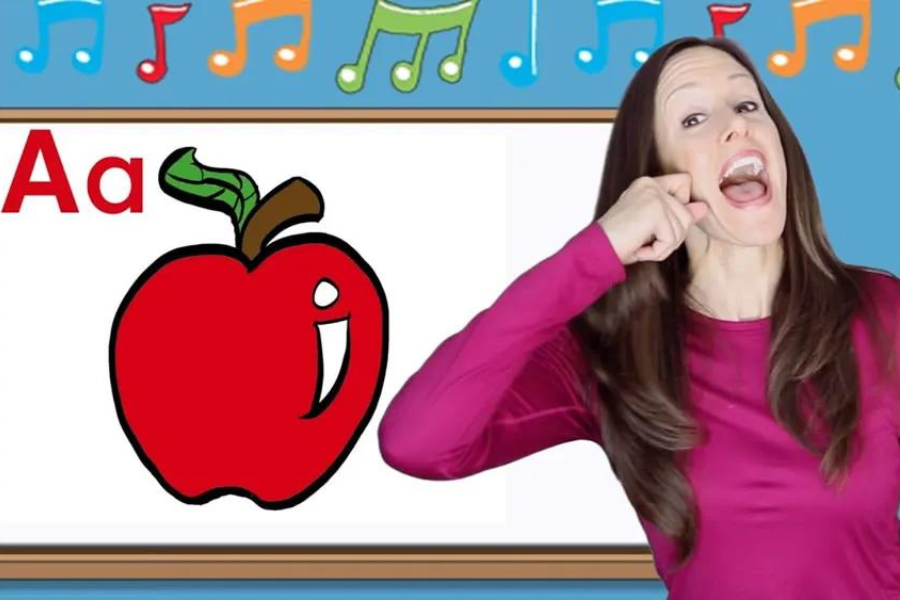
Source: ytimg
How to Teach Phonics Creatively?
When kids learn words in fun ways, they stay interested. Also, it makes kids feel good to learn new sounds, which makes reading more fun for them. Teachers may come up with exciting and imaginative ways to get kids interested in learning letters and sounds. Phonics Teacher Training Courses also educate teachers how to make lessons that are fun and hands-on so that young students stay interested and thrilled to learn.
Creative Ways to Teach Phonics
Use art and craft for sound learning
Allow kids to make projects with sound themes, like “S is for Snake” or “M is for Mask.” These games help kids remember letters and pictures. These kinds of ideas are often taught to people who want to become phonics teachers.
Introduce storytelling with sounds
Kids naturally pick up on trends when they read short stories that focus on a certain sound. For instance, reading a story with lots of /b/ words helps students recognize them while keeping them interested.
Add music and rhythm to reinforce sounds
Simple sound chants and rhythmic patterns help young children remember phonics rules more easily. When familiar tunes are used to practise blends or digraphs, repetition becomes fun and engaging instead of routine.
Create learning stations
Arrange small spaces with different hands-on activities like sound jars, alphabet tiles, picture matching and mini chalkboards. Moving from one station to another makes learning exciting and fascinating. Teachers usually learn how to construct these sorts of settings in Phonics Teacher Training Courses.
The Phonics Teacher Training Courses offered by Vidhyanidhi Education Society (Govt. Regd.) give teachers hands-on, innovative ways to help young students develop strong basic reading and writing abilities.
Master Phonics Blends with ease—join Vidhyanidhi’s Phonics Course today!
For downloading the brochure of Phonics Course, Click Here!
Call or Whatsapp on +918104606573 / +919869866277, for more details of Phonics Course!
Phonics Ideas for Kindergarten to Teach
FAQs
What is the Most Effective Way to Teach Phonics?
Short, daily practice with clear sound-letter instruction, blending activities, and hands-on tasks helps children learn phonics effectively.
What are the Five Pillars of Phonics?
Phonemic awareness, phonics instruction, fluency, vocabulary, and comprehension together support early reading development.
What is the Correct Order of Teaching Phonics?
Start with letter sounds, then move to CVC words, blends, digraphs, long vowels, and more complex patterns step by step.
What is the Best Approach to Teaching Phonics?
A structured, multisensory method with fun Phonics Ideas for Kindergarten to Teach works well. Vidhyanidhi Education Society supports this through expert training.
