


Learn to Read by Phonics
Learn to Read by Phonics
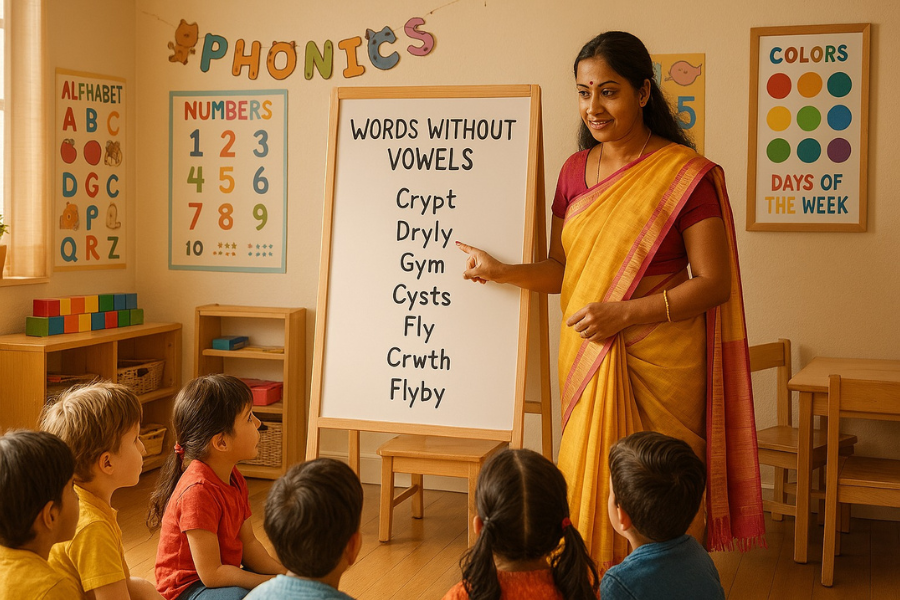
Children start learning to read through phonics by matching Letters with their Sounds. Rather than memorizing words, they learn how sounds comes together to form words. This makes sound recognition, words blending and abilities for reading step by step better.
It also helps kids read new words independently and confidently. Learn to Read by Phonics makes reading simple, clear and enjoyable for young learners. It supports early students in developing accurate pronunciation, better spelling and a natural interest in reading from a young age.
Table of Content
How Learn to Read by Phonics?
Phonics helps kids learn to read words step by step in an easy and organised way.
- Kids learn the single sounds letters like /a/, /b/, and /c/.
- They learn about blending sounds.
- Kids learn to read words such as “cat” and “dog.”
- Regular practice assist them to identify word patterns and read smoothly.
- Learning digraphs sounds like “sh” and “ch” and begin learning tricky words.
Kids learn to read and understand words more quickly and easily through practice. They know how words are constructed which improves their reading accuracy and builds confidence.
Click Here, for downloading the brochure of Phonics Teacher Course!
For the details of Phonics Teacher Course, Call / Whatsapp on +919869546913 / +918369377157.

A Step by Step Guide to Learn Reading by Phonics?
Phonics is a clear and organized way for kids to improve their reading skills. Every stage helps you make small steps forward and gain confidence.
- Teach sound of the letters.
- Teach about vowel and consonant sounds.
- Practice blending short words like “bat” and “sit.”
- Introduce digraphs like “ch,” “sh,” and “th.”
- Teach them to read simple words to help them understand better.
- Activities with words can make learning fun.
- Work on breaking words up to get better at spelling.
Everyday drill helps kids read with ease and smoothly. Provides clear understanding of word formation which helps enhance confidence while reading with accuracy.
Step 1 – Letter Sounds
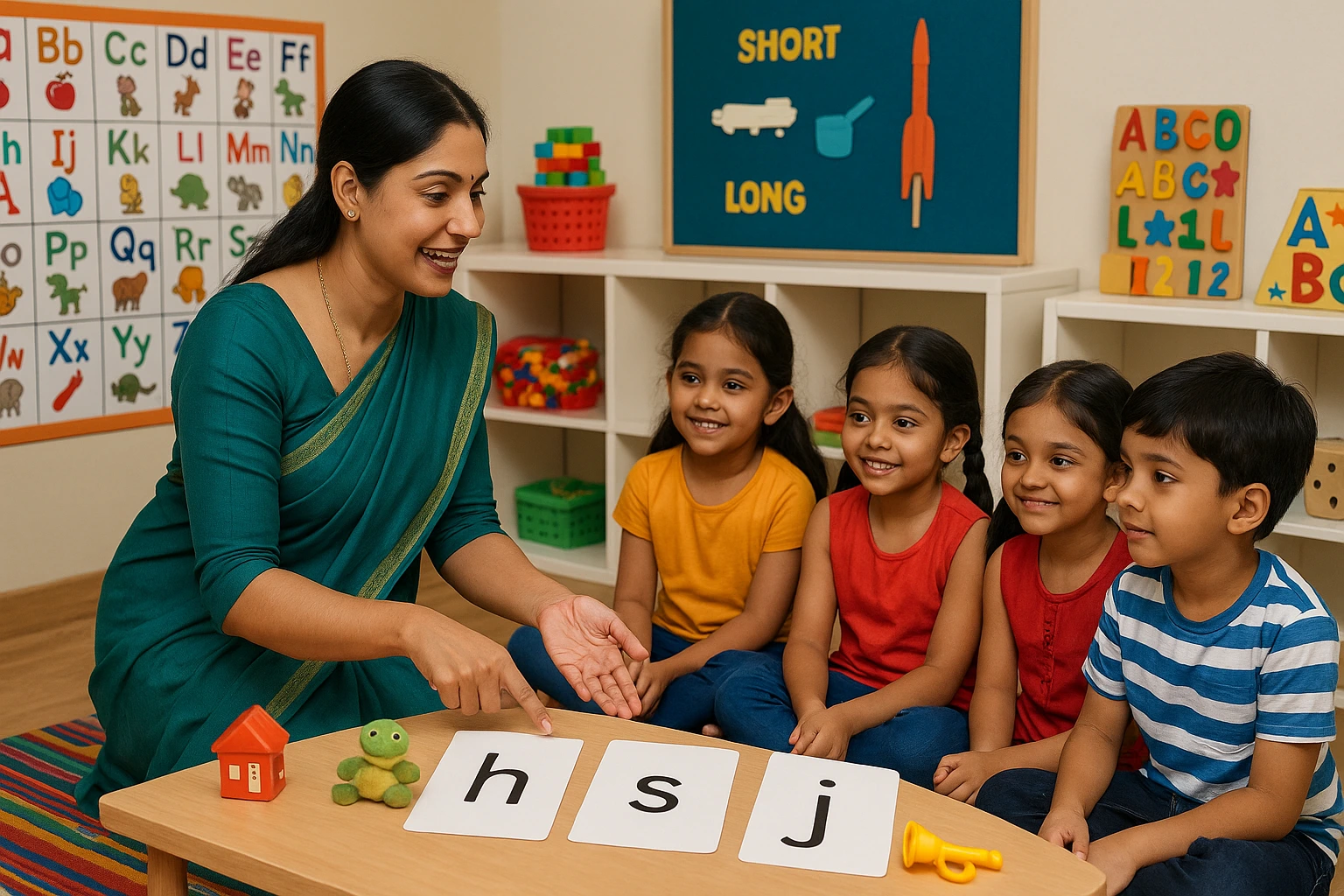
Letter Sounds concentrate on helping kids identify the sound each letter makes. This is the base of phonics learning and supports early reading skills.
- Start with common letter sounds like /a/, /s/, /m/, and /t/.
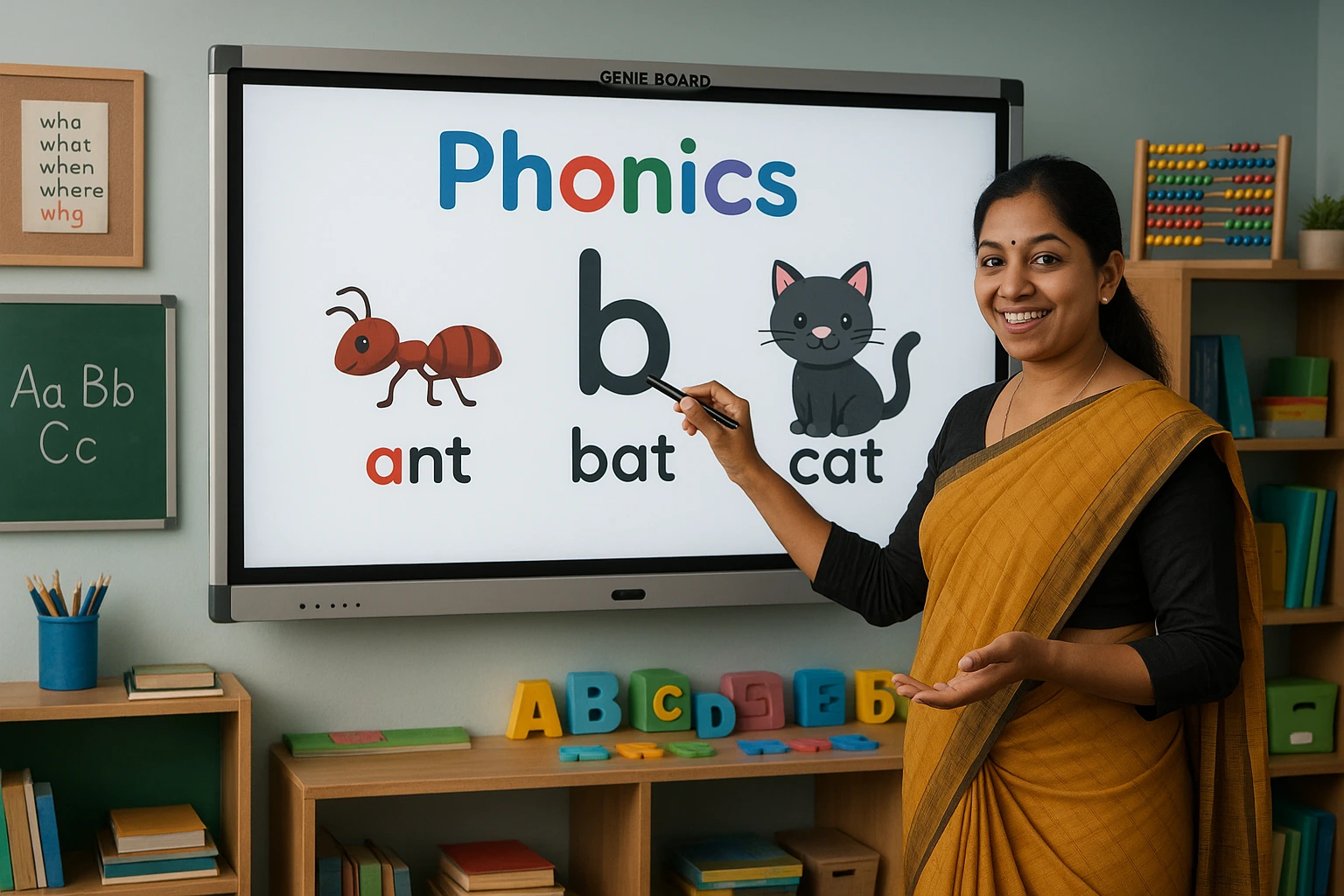
- Teach sounds properly, for example: “a” as in apple, “b” as in bat, “c” as in cat.
- To help learn blending use simple three letter words, such as “s” in sun and “m” in mat.
- For better retention use repetition will loud drill activity.
- To make learning more relatable Use flashcards, pictures or objects.
- Reinforce everyday through simple and short activities.
Initially emphasizes should be on recognition of sounds and not on letter names. Daily reinforcement enhances sound identification faster with helps to merge letters with easy while forming words.
Click Here, for downloading the brochure of Phonics Teacher Course!
For the details of Phonics Teacher Course, Call / Whatsapp on +919869546913 / +918369377157.
Step 2 – Blending
Blending is the method to help kids understand sounds coming together make words. This step aids them to shift from sound recognition to essentially reading.
- Begin with identifying each sound slowly in simple words, such as /c/ – /a/ – /t/.
- Teach kids to blend the sounds for word formation like “cat.”
- Introduce simple three letter words like “bat,” “tin,” and “pet.”
- Repeat blending exercises to boost confidence and ease while reading.
- Motivate students repeat sounds easy and without hesitation.
- Use picture-word matching for better learning.
Examples:
- /c/ + /a/ + /t/ = cat
- /d/ + /o/ + /g/ = dog
- /m/ + /a/ + /p/ = map
Repetition, helps kids to learn blending sounds and reading faster with ease which makes it effortless.
Step 3 – Digraphs
Kids understand that two letters can come together to make one sound. Basic Phonics helps take steps towards enhancing reading precision.
- Familiarize known digraphs like “sh,” “ch,” “th,” and “ph.”
- Understand the above pairs make a single sound, not two different sounds.
- Give simple examples such as “sh” in shoe, “ch” in chip, and “th” in thin.
- Motivate kids to hear carefully and reiterate the sounds.
- For effortless reading words that include digraphs to be read frequently.
- Use pictures or flashcards to connect sounds with meaning.
Examples:
- “sh” → ship, shoe
- “ch” → chip, chat
- “th” → thin, this
- “ph” → phone, photo
Daily repetition makes it easy for the children to identify sound with patterns which makes reading easily and correct.
Click Here, for downloading the brochure of Phonics Teacher Course!
For the details of Phonics Teacher Course, Call / Whatsapp on +919869546913 / +918369377157.
Step 4 – Alternative Graphemes
Children learn that a sound can be represented in different ways. This step helps to improve accuracy in reading and the ability to spell.
- Tell one sound can be spelt in different ways.
- Use common variations in a gradual, simple way.
- Begin with known sounds, then slowly present new forms.
- Motivate kids to observe difference and relate words.
- Practice consistently through reading and writing activities.
Examples:
- The /ai/ sound → “ai” in rain, “ay” in day, “a-e” in cake
- The /ee/ sound → “ee” in tree, “ea” in sea, “y” in happy
A Consistent reinforcement helps kids learn to identify forms which makes reading easier and spelling more correct.
Step 5 – Fluency and Accuracy
The emphasis is to support children to read effortlessly, properly and confidently.
At this point, children use their phonics knowledge to read with better speed and understanding. If you read these lines more than once they are easier to read and make fewer mistakes. Programs for teachers, like the Phonics Teacher Training Course, help teachers teach kids well.
- Read simple sentences and short stories on a regular basis
- Focus on correct pronunciation and reading at a steady speed
- Read the same texts again to improve fluency
- Ask simple questions to check understanding
- Introduce a few new or more difficult words to build confidence
Examples:
- “The cat sat on the mat.”
- “She has a red bag.”
Vidhyanidhi Education Society (Govt. Regd.) offers a Phonics Teacher Training Course that focuses on building these essential skills. A well planned Phonics Teacher Training Course make sure kids become accurate and confident readers over time.
Sign up for the Phonics Teacher Course at Vidhyanidhi Education Society (Govt. Regd.) now and learn how to master Word Phonics!
Before you move on, hit play! Our YouTube video brings this topic to life with easy-to-understand insights.
Click Here, for downloading the brochure of Phonics Teacher Course!
For the details of Phonics Teacher Course, Call / Whatsapp on +919869546913 / +918369377157.
FAQs
At What Age Should Phonics Be Taught?
Phonics usually start at 3 to 5 years of age. They begin to connecting letters and sounds through simple and fun activity.
Is It Too Late To Learn Phonics?
It’s never too late to learn phonics. Learning Phonics can help young kids and adults of all ages to improve their reading.
How Long Does It Take For Kids To Learn Phonics?
Most youngsters require 6 months to 2 years, depending on practice, consistency and individual learning rate.
What Is The Fastest Way To Teach A Child To Read?
The greatest way is a systematic one. Vidhyanidhi Education Society promotes Learn to Read by Phonics for quicker, better learning to read.
