


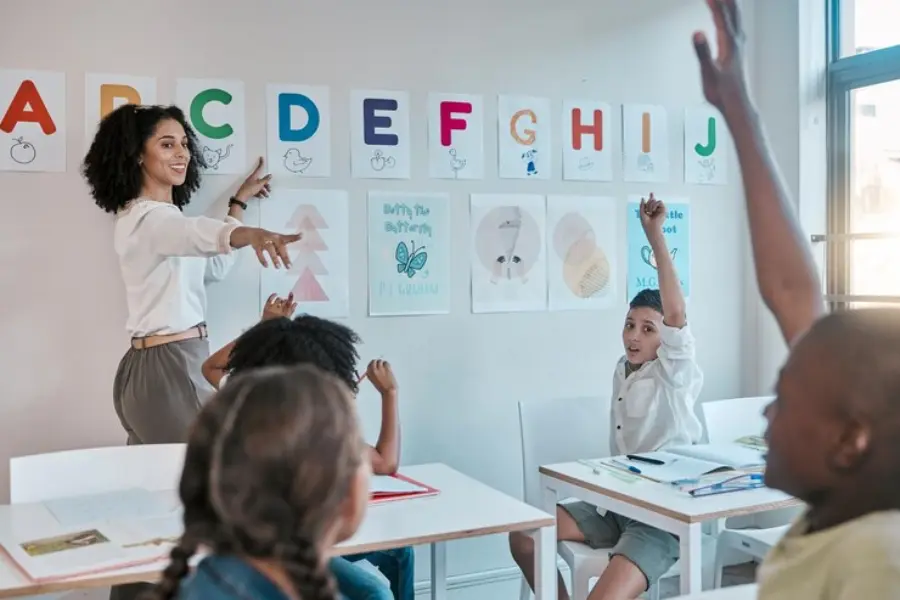
What are Phonetic Sound Examples?
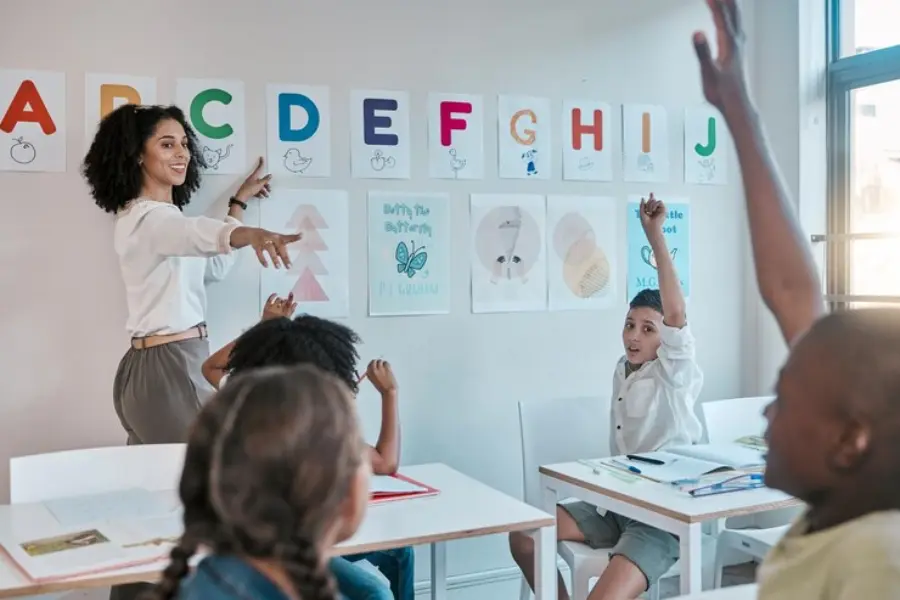
Source:- peopleimages
What are Phonetic Sound Examples?
Phonetic Sound Examples are the sounds of the letters that are required for reading and pronouncing words correctly. Examples are / a / in cat, / e / in pen, / i / in pin, / o / in dog and / u / in sun.
Phonetic Sound Examples help children learn how individual letters and groups of letters make different sounds in spoken English. Understanding these sounds is key to improving reading, spelling and pronunciation. For instance, “b” produces the /b/ sound as in “bat,” while “sh” produces the /sh/ sound as in “ship.” Phonetic Sound Examples – helps you learn to recognize words and sound them out right. This method supports early literacy and makes reading easier, more precise and enjoyable for young learners.
Table of Content
What are Phonics Sounds?
Phonics Sounds are the specific sounds that individual letters or letter combinations make in the English language. They help children learn how spoken sounds connect to written letters and words.
What are Phonics Sounds:
- The letter b sound /b/ as in ball.
- The letter s sounds /s/ as in sun.
- The letters c and h together make the sound /ch/. Like in chair.
Phonetic Sound Examples does not teach children to read by memorizing whole words or by using the letter names of the alphabet (say “A” “ay”) but rather by blending individual sounds. A young child can blend the sounds /c/, /a/ and /t/ to read the word cat.
This sound-based approach improves reading accuracy, spelling and pronunciation. Phonics is the building block of early literacy and helps children become proficient readers down the road.
To Download Brochure of Phonics Course, Click Here!
For more details of Phonics Course Call / Whatsapp +919869866277 / +919869546913
Examples of Phonetic Concepts
Phonetic Sound show how sounds behave in words, and how letters represent those sounds.
Some of the usual Examples of Phonetic Concepts are:
- Letter Sounds: In moon, the letter m makes sound /m/.
- Short vowel sounds: The A in cat is a short vowel sound.
- Long Vowel Sounds: The “a” in cake is an example of a long vowel sound.
- Digraphs: Digraphs are two letters that combine to make one sound. Examples- sh as in ship and th as in thumb.
- Blends: Two or more consonants blended together. For example, b l in blue and s t in star.
- Rhymes: Rhymes are words that sound the same at the end- hat, mat, cat.
- Silent Letters: The “k” in “knife” and the “b” in “lamb” are not said.
Learning these Phonetic Sound helps the kids learn new words and how to use them correctly in reading, spelling and pronunciation.
To Download Brochure of Phonics Course, Click Here!
For more details of Phonics Course Call / Whatsapp +919869866277 / +919869546913

Source:- readingeggs
Blending and Segmenting: What Comes after Letter Sounds?
Once children can say the sounds of individual letters, the next steps are blending and segmenting. You need to have these two skills to be able to learn to read and spell.
Blending
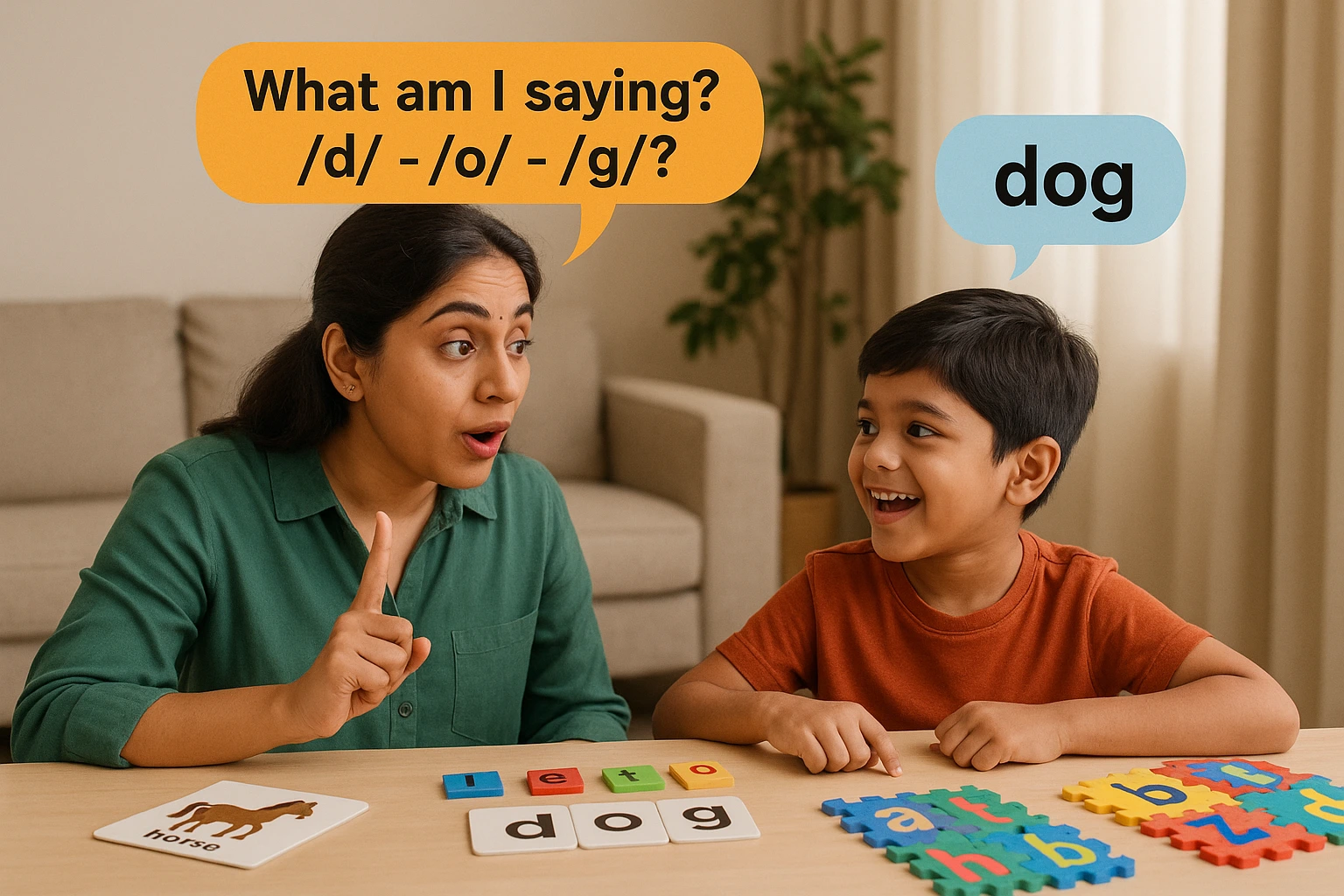
Blending is when you put separate sounds together to make a whole word.
Here is an example:
- /c/ + /a/ + /t/ = cat
- /d/ + /o/ + /g/ = dog
- /s/ + /h/ + /i/ + /p/ = ship
Children who smoothly blend sounds together can read new words without memorizing them.
Segmenting
Segmentation is the opposite process. It is the process of breaking a word into its respective sounds.
Sample:
- Cat → /c/ /a/ /t/
- Fish → /f/ /i/ /sh/
- Book –> /b/ /oo/ /k/
Let us see the Benefits of Blending and Segmenting: What Comes after Letter Sounds?
- Improves reading fluency.
- Develops orthographic ability.
- Enhances hearing and comprehension.
- Builds confidence to deal with new vocabulary.
- Promotes independent reading.
They each help children to learn to recognize sounds and to write and read words. Children learn to identify sounds and read and write words through practice of the skills over and over again. They are the bridge between mastery of phonetics and reading fluency.
To Download Brochure of Phonics Course, Click Here!
For more details of Phonics Course Call / Whatsapp +919869866277 / +919869546913
Phonics Vs. Memorization: Why Sound-Based Learning Wins
A Phonics Teacher Training Course will help teachers understand why it’s better to learn via sounds instead of memorizing words. While memorization is good for helping children recognize the limited number of words, phonics offers a method that works for thousands of words.
Phonics Vs. Memorization: Why Sound-Based Learning Wins:
- Kids understand how letters and sounds come together.
- They can read words they don’t know on their own.
- Spelling becomes easier because sounds help in word formation.
- Confidence in reading increases over time.
- Learners develop stronger pronunciation skills.
Memorizing something is all about recalling every word in isolation. This might be hard as the vocabulary expands. Phonetic Sound Examples, however, provides the patterns and sound correlations that enable toddlers to decipher words rationally.
The Phonics Teacher Training Course helps students to learn practical methods to teach Phonetic Sound , blending, segmenting, digraphs and other phonics principles in an effective manner. These approaches help to make teaching reading more interesting and effective.
Vidhyanidhi Education Society (Govt.Regd.) is offering a Phonics Teacher Training Course for teachers who want to acquire good phonics teaching skills. With organized learning and practical approaches, teachers may help their kids become confident readers and writers.
Build reading success with Vidhyanidhi Education Society’s Phonics Course today!
To Download Brochure of Phonics Course, Click Here!
For more details of Phonics Course Call / Whatsapp +919869866277 / +919869546913
What are Phonetic Sound Examples?
FAQs
What are the Most Common Phonetic Sounds?
The common phonetic sounds such as /sh/, /ch/, /th/ and /ph/ includes short vowels, long vowels, consonant sounds and digraphs.
How Many Phonetic Sounds are in English?
There are approximately 44 phonetic sounds, which includes vowel and consonant sounds in English. It represents by different letters and letter combinations.
Which Phonics Sounds to Teach First?
Teaching kids with simple sounds like s,a,t,p,i,n method. These letters help kids form and read basic words.
What is the Best Phonics for Kindergarten?
For Kindergarten regular phonics is the considered the best. It teaches sound in organized sequence that support early ready.
