



What is Montessori Learning Style?
Source:- learning
What is Montessori Learning Style?
Montessori Learning style is innovative and child-focused; it believes in self-exploration. The children are allowed to choose activities based on their curiosity and complete them with minimum guidance. This builds independence and responsibility from early years. Montessori learning style primarily supports academic learning through its thoughtful activities.
In a Montessori classroom, kids are given the freedom to choose activities that match their interests and developing needs. Montessori Learning also promotes creativity, focus on, problem solving and practical life skills, making learning meaningful and fun for kids.<
Table of Content
The Different Learning Styles
Each kid learns differently, and understanding these learning styles helps teachers build teaching experiences efficiently. Identifying individual preferences allows kids to absorb information more comfortably and confidently.
Some common learning styles include:
Visual learning
This includes learning through flashcards, picture books, or role play.
Listening to learn
Some students enjoy auditory learning, like storytelling, rhyming, reading books, and poems.
Written learning
It is more focused on writing work like solving worksheets, writing, and taking notes.
Kinesthetic learning
This includes hands-on activities; some children better understand the concept when they practically try it.
Many kids depend on both learning styles rather than depending on only one. Montessori materials are designed to activate multiple senses of children that support different learning styles. A positive learning environment makes every child feel valued and supported.
For more details of Montessori Teacher Course, Call / Whatsapp on +919869546913 / +919869866277.
To download brochure of Montessori Teacher Course, Click Here!

Source:- shutterstock
The Whole Child Philosophy
The Whole Child Philosophy means that the child is the main focus. The activities under Montessori Education are designed with tools that ensure overall growth, making the child ready for further transition. It not only supports a child’s academics but also builds self-awareness from a young age.
Important aspects of Montessori philosophy:
- Children develop intellectual capabilities like critical thinking, reasoning, and problem-solving in early years. (cognitive development)
- With precise activities like beading, fine and gross motor skills significantly improve. (physical development)
- The whole child philosophy mainly focuses on creative enhancement of children with innovative art activities. This helps students to channelize their interest and talents. (creative expression)
- In Montessori, children sit together for circle time or group discussion, which boosts public speaking skills of children and increases confidence.
- Mixed-age group learning is an innovative concept of Montessori to bridge the gap between young and older kids.
In Montessori education, the Teachers act as directors who support each child’s unique strengths and interests. Whole Child Philosophy shows positive results in the overall development of a child, building academics along with independence.
For more details of Montessori Teacher Course, Call / Whatsapp on +919869546913 / +919869866277.
To download brochure of Montessori Teacher Course, Click Here!

Source:- trilliumschool
What are the Five Principles of the Montessori Method?
The Montessori Method is based on five important principles that help children develop independence, confidence, and a love for learning.
The Absorbent Mind
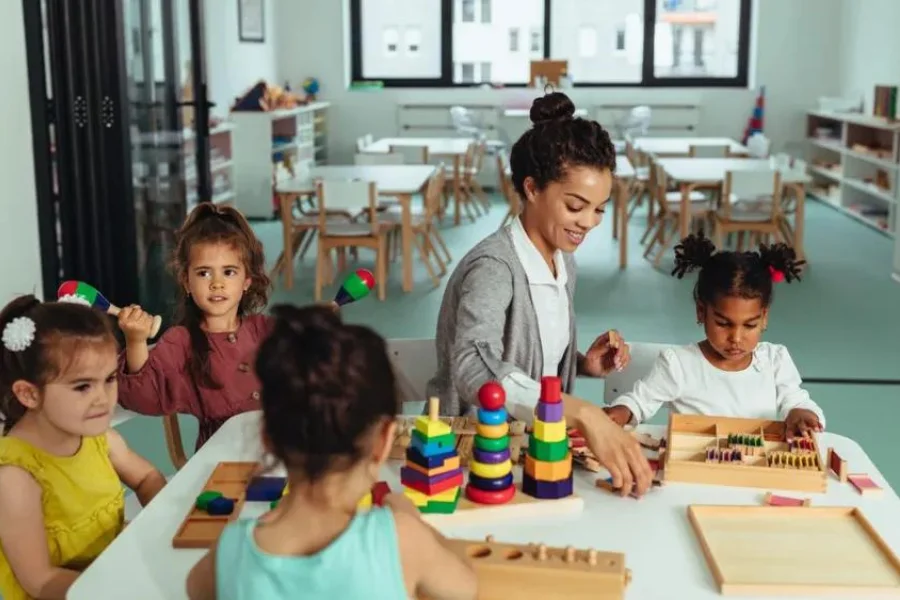
Montessori learning believes that children rapidly absorb information from their surroundings. The classroom is designed in a way that represents realistic examples for impactful memory.
Prepared Classroom Environment
This involves teachers preparing the classroom setup and specific activities in advance. So that the child instantly gets involved in their interested activity. This saves time and eliminates chaos.
Independent Learning
Children are encouraged to learn and complete activities independently. The materials used are child-friendly and help them identify their mistakes.
Respect for Every Child
Montessori education believes every child learns at their own pace and capacity. It never forces a child to fully complete the tasks if they are unable to do so. This method also supports students with diverse learning disabilities.
Self-learning
With Montessori materials, students are encouraged to self-learn. Teachers explain concepts and children try to practically apply their understanding, which boosts critical thinking.
The core principles of the Montessori Method are designed precisely to support inclusive growth of children with a prepared environment. Joining Vidhyanidhi Education Society (government-registered) provides profound analysis of the five principles.
For more details of Montessori Teacher Course, Call / Whatsapp on +919869546913 / +919869866277.
To download brochure of Montessori Teacher Course, Click Here!
Source:- shutterstock
Learning to Read and Write the Montessori Way
Learning to read and write in Montessori education is an engaging process. In Montessori education, children are supported with materials and activities that develop vocabulary, listening, and speaking skills. The phonetic method introduces the sounds of words, which makes pronunciation clearer.
- Before memorizing words directly, children are equipped with phonetic sounds.
- Using tactile materials such as sandpaper letters.
- Writing is developed only after improvement of fine/gross motor skills through practical activities.
- Encouraging storytelling and conversation.
- Each word, colour, or shape is introduced engagingly and in a step-by-step method, leaving a lasting impact.
- Children are allowed to complete writing according to their capacity
Vidhyanidhi Education Society (government-registered) offers a Montessori Teacher Training Course which is designed with engaging topics of authentic Montessori education, preparing candidates for a successful career in Montessori teaching.
The certification gained from Vidhyanidhi Education Society is globally respected, which opens valuable teaching positions in reputed schools.
Boost your pay with a Montessori Teacher course from Vidhyanidhi Education Society!
For more details of Montessori Teacher Course, Call / Whatsapp on +919869546913 / +919869866277.
To download brochure of Montessori Teacher Course, Click Here!
Montessori Teacher Training Course
FAQs
What Age Is Best For Montessori?
For Montessori education, children from six months to six years can enroll.
Is Montessori Better Than Nursery?
Both methods are focused on supporting early development of children; only the approach and teaching method change.
Is LKG And Montessori The Same?
They differ in their teaching and nurturing approach. LKG follows a simple traditional pattern (day-care) while Montessori focuses on a child-centered approach.
Why Do Parents Like Montessori Schools?
Montessori builds self-worth and independence from early childhood, which makes them responsible adults in the future.
