


How do you Teach Phonics?
How do you Teach Phonics?
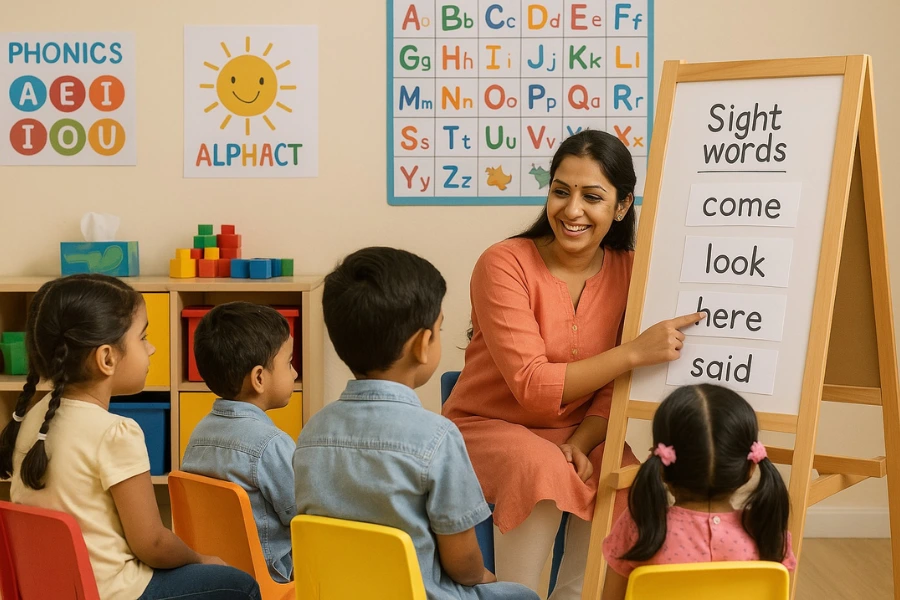
How do you Teach Phonics? It is a question frequently asked by parents and teachers who wish to help their children to read and write with confidence. Phonics helps children to understand how letters and sounds combine to make words. How do you Teach Phonics is a great way to help build strong reading skills from an early age. Using simple activities, sound rehearsal, and regular practice, kids can connect letters to sounds easily and start reading independently.
Table of Content
Steps to Teach-Phonics
Don’t just teach children the names of the letters – How do you Teach Phonics – teach them the sounds each letter makes. Each step should be based on the previous step so that children gain confidence in reading and spelling gradually.
Steps to Teach-Phonics:
Start with Letter Sounds
How do you Teach Phonics? Begin by Introducing the Sounds of individual letters instead of just their names. Exercise them with repetition so they learn to recall each sound separately.
Teaching of Sound Recognition
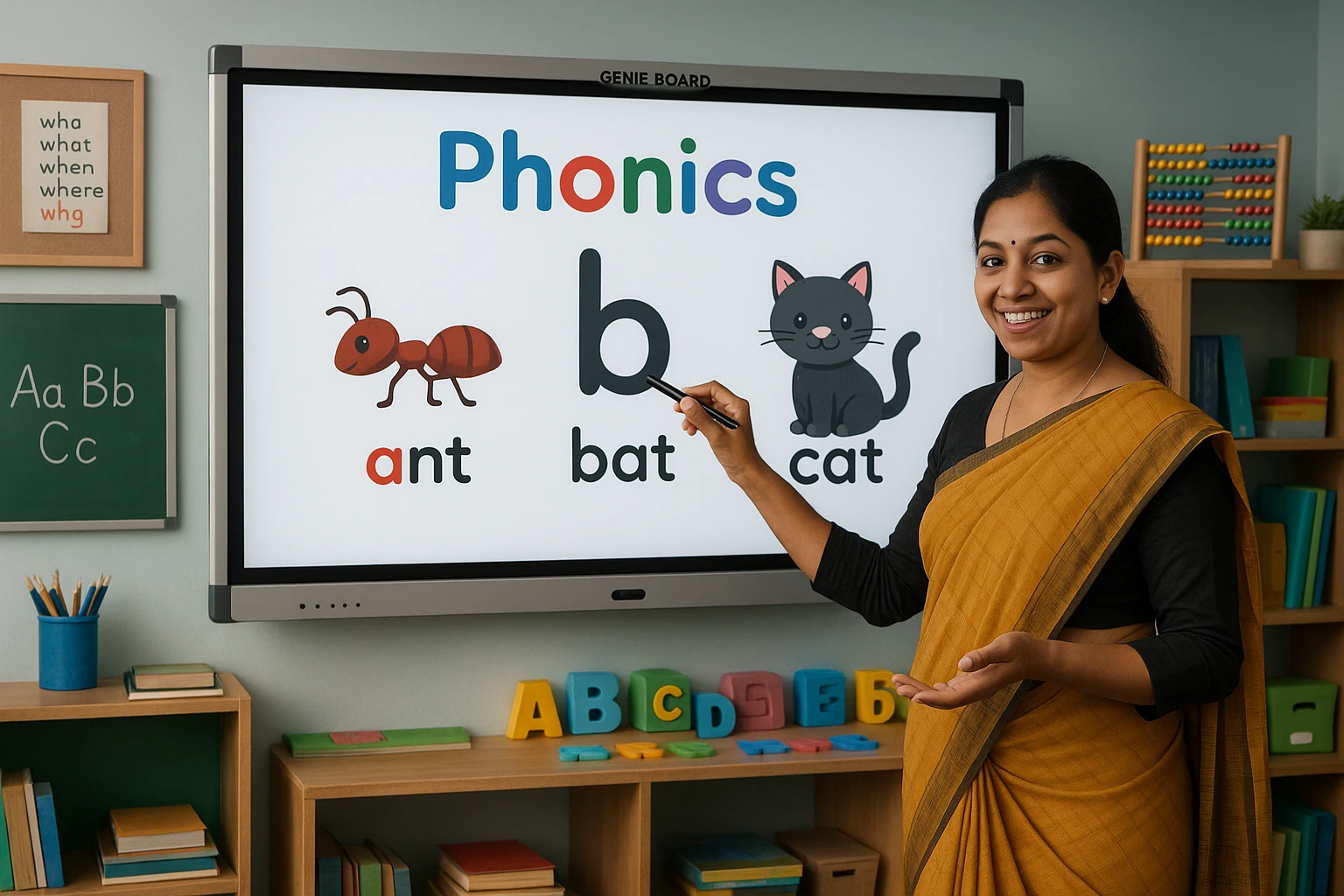
Help kids listen for sounds in everyday words. For example, ask what sound they hear at the beginning of “cat” or “bat.” It aids in hearing and prepares them for reading.
Blending Familiarity
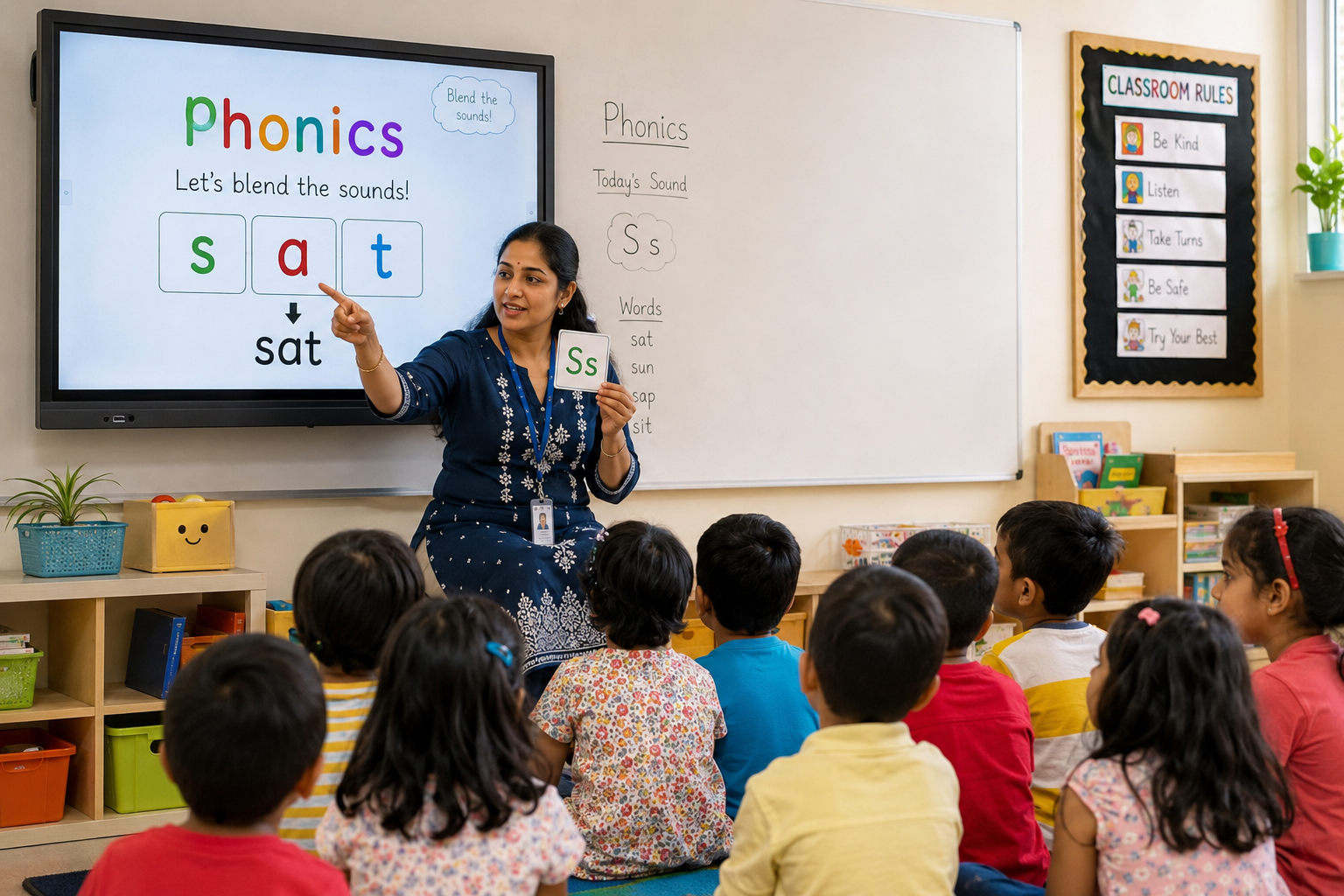
When children learn some sounds, help them to blend sounds together to make words. For example, blend /c/ /a/ /t/ to say “cat.” Practice blending slowly and then speed up as they get better.
Practice Breaking it Down
Segmenting is breaking a word down and saying the sounds in the word. Children are asked to break up “dog” into /d/ /o/ /g/. That’s a good step for writing and for spelling.
You can start with easy words
Begin with short, easy words (CVC words like cat, pen, sun). Don’t use big words to start with, or people will get mixed up.
Sight Words Intro
Some words are hard to say, like “the” or “was.” Sight words are taught by repetition and memorization.
Visuals & Interactive
Flash cards, pictures and phonics games make learning fun. The best way for children to learn is by being able to touch and see the materials.
Reading Exercise
Provide simple books with phonics for them to be able to apply what they are learning. Reading often builds fluency and confidence.
Prioritize consistent practice
Short daily classes are more useful than long, irregular classes. Kids are much better at remembering consistent patterns and sounds.
Give positive feedback
Let your child try, even if he makes a mistake. To learn phonics successfully, confidence is needed.
Children learn the connection between Letters and Sounds. How do you Teach Phonics? Phonics is taught step-by-step. Children can develop good reading and spelling skills that support their overall learning skills with simple techniques and encouragement and with regular practice.
Click here to download the brochure of Phonics Course for Teachers!
For the details of Phonics Course for Teachers, Call or WhatsApp on +91 8104606573 / +919869546913.
Top Phonics Teaching Strategies
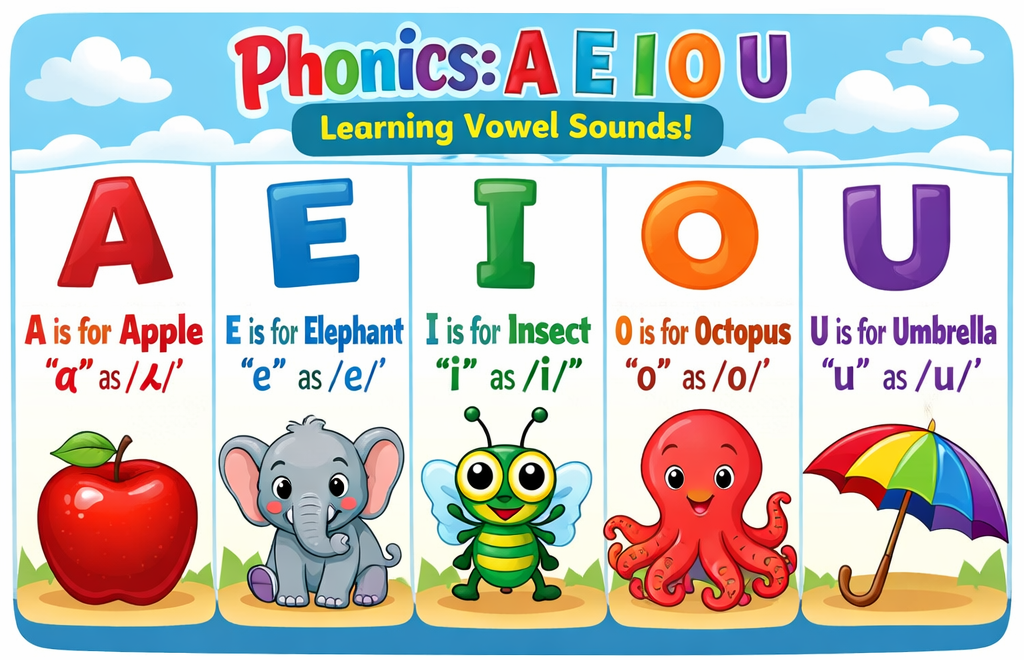
Phonics, well taught, helps children associate Sounds with Letters and helps them gain confidence in reading. People learn better and use the right tactics.
Top Phonics Teaching Strategies:
Systematic Learning Method
Begin with simple sounds and go on to more complex sounds, in a logical order.
Multi-sensory methods
Add visual, auditory and tactile activities such as tracing letters, making vocal sounds.
Practice with Blending and Segmenting
Continue to practice phonemic blending as you read words and phonemic segmentation as you spell.
Phonics Games Application
Games are a fun way to reinforce ideas and learn without the pressure.
Repetition and Re-phrasing
Regular reviewing will help children to remember the sounds and use them correctly.
Cracking Open Books That Can Be Read
Give books on the phonics level to build fluency.
Good phonics strategies are systematic, interactive and cumulative. Children build strong reading skills and long term confidence and approach the right way.
Click here to download the brochure of Phonics Course for Teachers!
For the details of Phonics Course for Teachers, Call or WhatsApp on +91 8104606573 / +919869546913.
Daily Practice Routine
A consistent Daily Practice Routine plays a key role in helping children master phonics. Good for memory and for developing good reading habits over time are short, targeted sessions, done daily.
Sound Revision
Get started. Spend a few minutes going over the Letter Sounds you have already learned so that you remember them.
Make some new sounds
Introduce a new sound slowly, and be certain the child understands it.
Blending Exercises
Join sounds to make words, e.g., cat, pen, bin, etc.
Segmenting Activity
Help children with spelling by breaking words into phonemes.
Games & Flashcards
Short exercises keep students on task and on target.
Reading time
They can read short sentences or books that use phonics.
Summary
Summarize what you have learned at the end of the session.
How do you Teach Phonics? A Daily Practice Routine helps build consistency and confidence. Children need to practice reading and spelling regularly, for short periods of time.
How to Make Phonics Fun?
How do you Teach Phonics? Fun Phonics Teaches letter sounds outside of books. Songs, rhymes, flashcards, listening games, stories and interactive activities can be used by teachers to enhance learning. Phonics exercises are fun and build confidence, pronunciation and enjoyment of early reading.
How to Make Phonics Fun:
Use “Action Songs and Rhymes”
Use music and movement to make sound instruction easier. Children learn and remember rhythm and repetition best.
Auditory Games
The interactive learning involves matching sounds to pictures and recognition of the initial phonemes.
Storytelling Pedagogy
Use short stories to teach phonological patterns, linking sounds to words.
Practice Activities
Kids will be occupied with letter tiles, flash cards or drawing.
Add Technology
Use educational apps and videos to practice and make it more fun.
Reward Effort
Small rewards motivate kids to participate and improve.
Vidhyanidhi Education Society’s (Govt. Regd.) Phonics Teacher Training Course helps teachers to apply these fun strategies in the right manner. When children participate in various activities, How do you Teach Phonics becomes fun and active. The right Phonics Teacher Training Course, teachers come to know effective ways to build the confidence of the students and help them to develop strong reading skills.
Vidhyanidhi’s Phonics Course for Teachers is a Course to Teach Phonics to Children and is a great way to start your road to becoming a phonics master!
Click here to download the brochure of Phonics Course for Teachers!
For the details of Phonics Course for Teachers, Call or WhatsApp on +91 8104606573 / +919869546913.
FAQs
What Is The First Thing To Teach In Phonics?
Start with simple letter sounds (not names) particularly common sounds such as /s/, /a/, /t/ to provide a good basis.
Which Vowel Sound To Teach First?
They are easy and often used, thus the short vowel sounds e.g. /a/ as in cat are generally taught first.
What Is The Most Effective Way To Teach Children Phonics?
A structured method with blending, segmenting, and daily practice works best. Vidhyanidhi Education Society explains How do you Teach Phonics effectively.
What Is The Most Effective Way To Teach Children Phonics?
A structured method with blending, segmenting, and daily practice works best. Vidhyanidhi Education Society explains How do you Teach Phonics effectively.
