




What is Inclusivity Meaning in Education?
Source: study
What is Inclusivity’s Meaning in Education?
Understanding the meaning of Inclusivity in Education is important for creating learning spaces where every kid feels valued and supported. The Inclusivity Meaning goes beyond basic participation and concentrates on giving each student equal access, respect, and opportunities to grow.
In today’s classrooms, the Inclusivity Meaning highlights how teachers, schools and parents work together so kids of all abilities can learn side by side. This idea forms the heart of What You Need to Know about Inclusion in Education, helping teachers build atmospheres that celebrate differences and encourage every kid to succeed.
Table of Content
Why is Inclusion in Education Important?
Education is a fundamental right of every child. Every child deserves to receive quality-based education in a conducive classroom environment, helping them learn in a manner that aligns with their learning needs. Inclusion is the most effective method of fostering the spirit of diversity in a regular classroom, empowering children to gain the desired competencies needed for a modern world.
Key reasons why inclusion matters:
Equitable distribution of learning opportunities
Education is a basic right, and ensuring that every child gets it is the main aim of Inclusion.
Improves confidence
When students learn together, they feel accepted and develop a strong sense of belonging.
Children learn empathy, cooperation, patience, and respect by interacting with classmates who have different needs and strengths.
Addresses every child’s needs
Inclusion supports each child’s academic growth by using a blend of various teaching methods that suit every child’s needs.
Eliminates any false beliefs
Inclusion educates the communities about the hardships suffered by Children with Special Needs and thereby helps to foster a spirit of positivity and unity.
Equips the child for modern life scenario
Inclusive education prepares children to handle the challenges of life with confidence, preparing them for a modern life where they are treated with respect and dignity.
Inclusion is a valuable tool that is a yardstick to measure the real participation of children in a regular classroom scenario, ensuring that every child gets an equal chance to receive quality education in a supportive learning environment.
To download the brochure of the LD Course, Click Here!
Call or WhatsApp on +919321024137 / +919869546913 to know more about the LD Course!
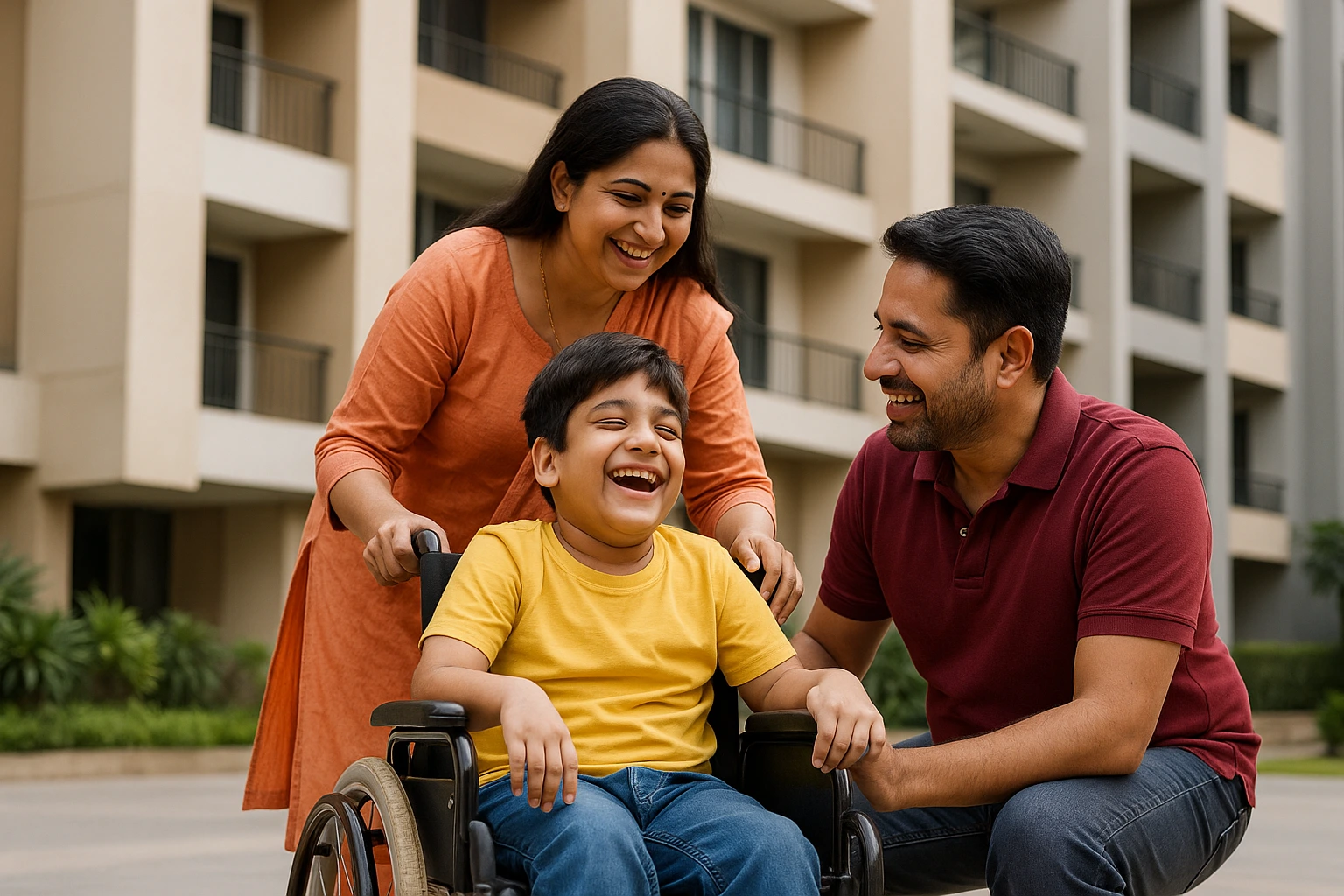
How does Inclusion Relate to the Right to Education?
The right to education aims to provide education to every child, irrespective of their learning needs. Its primary goal is to make education accessible to all those who might possess certain physical or Learning Disabilities hindering them from being an active part of the mainstream education.
Key points that show this connection:
Education without discrimination
Inclusion guarantees that children with disabilities are not denied admission or placed in separate settings simply because they learn differently.
Equal access to classroom learning
The Right to Education becomes truly effective only when schools offer accessible teaching methods, modified materials, and supportive environments.
Reasonable accommodations
Inclusion ensures necessary adjustments—such as assistive devices, visual aids, simplified instructions, or extra time—so children with disabilities can learn with dignity.
Promotes emotional well-being
A happy learning space is the foundation for joyous learning for every child, eliminating any stress or fear in the minds of children with special needs.
Promotes independence
Inclusive practices encourage students with disabilities to build confidence, self-advocacy, and real-life skills.
Strengthens teacher responsibility
Schools and educators are responsible for adapting their methods so every child, including those with disabilities, benefits from quality education.
Inclusion makes the Right to Education meaningful by ensuring that children with disabilities receive the same respect, opportunities and chances to succeed as their peers.
To download the brochure of the LD Course, Click Here!
Call or WhatsApp on +919321024137 / +919869546913 to know more about the LD Course!
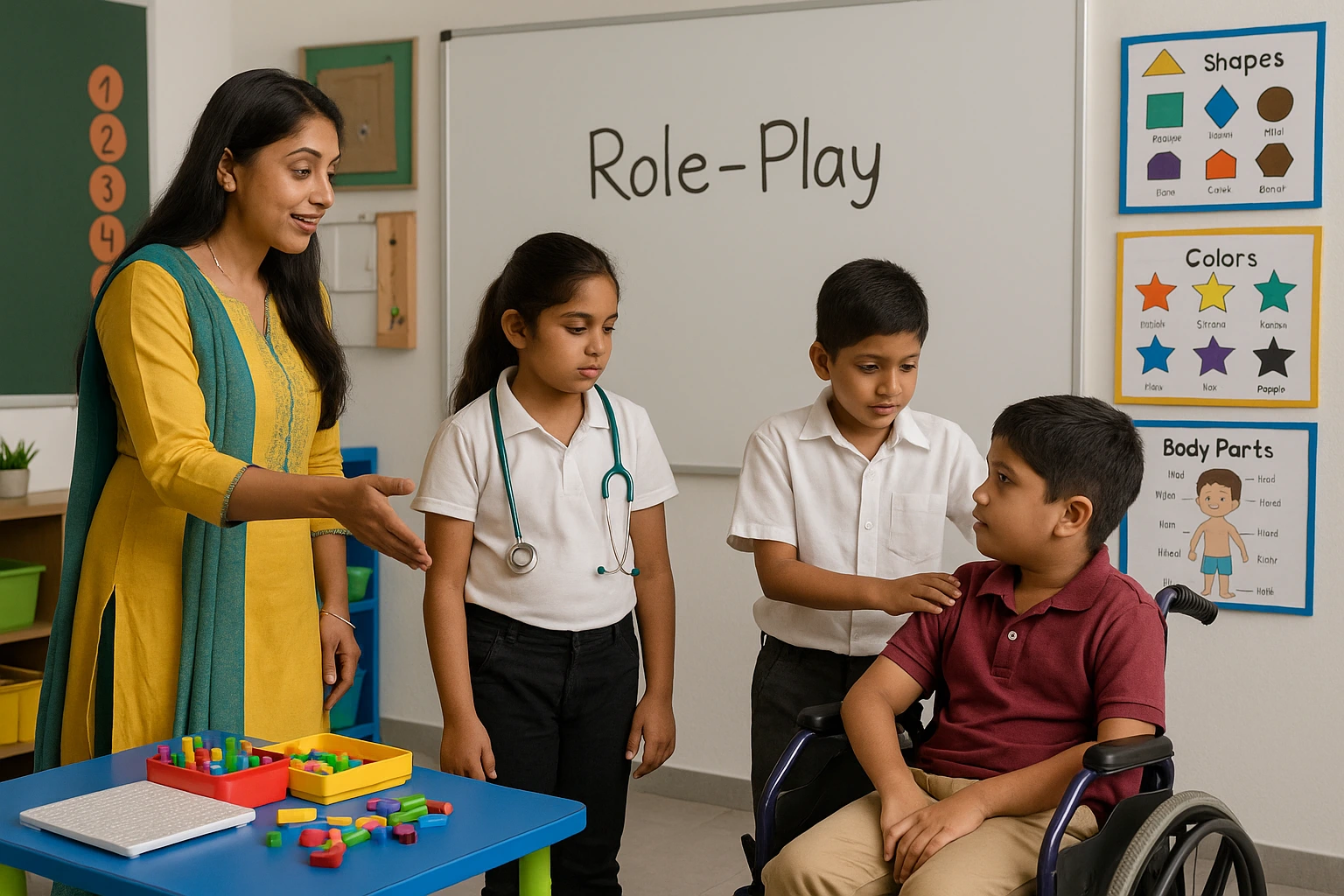
What Makes an Inclusive Learning Environment?
An Inclusive Learning Environment is a learning space that encourages every child to express their ideas clearly and where every child feels valued and respected, being treated with dignity and receiving equal chances to participate completely. It eliminates obstacles that are restraining the child’s participation in the classroom and ensures that children with diverse learning needs receive the desired academic assistance and guidance. It incorporates different teaching pedagogies and methodologies that cater to every child’s needs, fostering fairness and a spirit of celebrating diversity.
Primary attributes of an inclusive learning environment:
Learner-Friendly classrooms
Classrooms are designed in a manner that makes it easily accessible for the children with physical impairments to move around comfortably with the help of ramps, railing etc.
Flexible Teaching Tactics
Different types of teaching methods are used to cater to the diverse learning needs of children, suiting their learning styles.
Latest Tools
Using the latest ai backed tools that make learning interesting and innovative makes learning a stress-free process for children with special needs.
Understanding Approach
Teachers should be highly positive when it comes to the child’s learning progress and should focus on the smallest achievements, instilling in the child the confidence to strive harder for better results.
Better Alliances with Peers
Students interact with each other and develop an empathetic attitude, helping them support each other.
Customised Learning Plans
Students are offered the desired support in the form of additional time, exclusive assessment methods to help the child be completely engaged in the classroom.
Constant communication with Parents
Teachers maintain constant communication with Parents to update them about their child’s progress and work together to provide the child with the best intervention approaches.
An inclusive learning environment provides every child a secure feeling and assures the child that their needs are given due attention, eliminating any barriers that can become a hurdle to the child’s overall progress.
To download the brochure of the LD Course, Click Here!
Call or WhatsApp on +919321024137 / +919869546913 to know more about the LD Course!
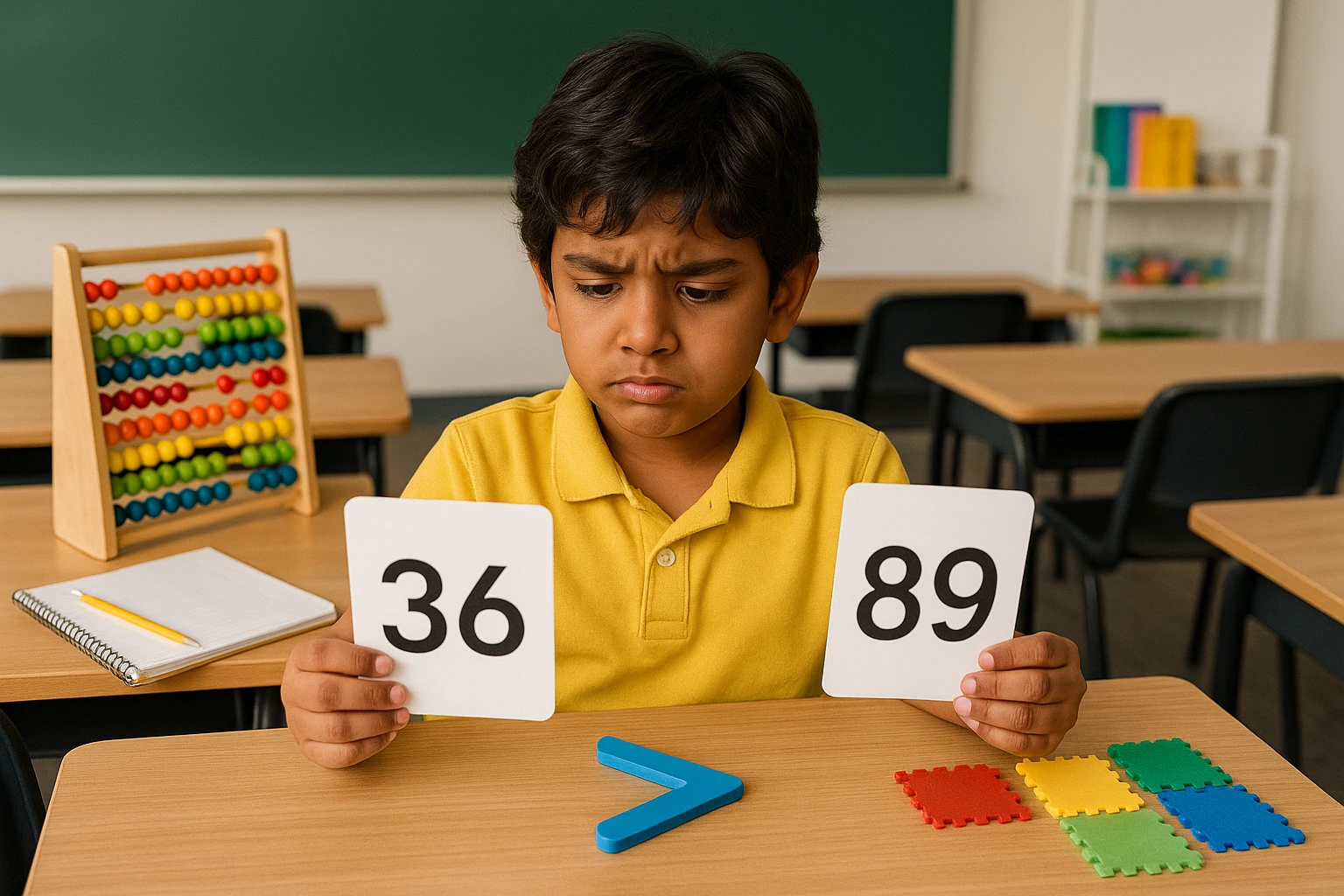
How does Vidhyanidhi Education Society Contribute Towards Inclusivity in Education?
Vidhyanidhi Education Society (Govt. Regd.), a premier Teacher Training Institute has initiated a top-notch Learning disability Program that has thoughtfully imbibed all the important attributes of inclusive education, empowering educators to make a meaningful impact on the learning skills of children with special needs. With the special expertise of leading professionals, teachers gain valuable insights into various practical classroom management skills, helping every learner feel valued.
Key contributions include:
Continuous professional development: Educators gain expertise on various learning disabilities such as dyslexia, dysgraphia, and dyspraxia, and they learn ways to devise methods to help individuals deal with challenges these disabilities cause.
Emphasizing on Practical strategies
The Learning Disability program places maximum focus on classroom management strategies that help in maintaining decorum in the classroom, thereby helping children attain their learning outcomes successfully.
Raising awareness
Vidhyanidhi Education Society ensures that its Learning Disability Course spreads knowledge about early identification and timely support for children with learning challenges.
Empowering skilled educators
The Learning Disability course helps teachers acquire strategies to create classrooms where children thrive academically and socially.
Fostering equal engagement
Teachers are educated to encourage children with varied learning needs participate in all classroom activities without being fearful of being judged.
Strengthening school backgrounds
Teachers prepared through Vidhyanidhi Education Society (Govt. Regd.) are able to design lessons, assessments and interactions that meet the needs of all students.
Through focused training and practical guidance, Vidhyanidhi Education Society (Govt. Regd.) ensures that inclusive education becomes a reality, especially for kids with learning disabilities.
Be the change—join Vidhyanidhi’s LD Course and empower true potential!
To download the brochure of the LD Course, Click Here!
Call or WhatsApp on +919321024137 / +919869546913 to know more about the LD Course!
FAQs
Why is Inclusivity Important in Teaching?
Inclusivity fosters oneness and a spirit of celebrating diversity amongst children, helping create a positive learning environment where every child feels valued.
What is the Main Purpose of Inclusion?
The main purpose is to provide equal learning opportunities so every child, especially those with disabilities, can participate, grow, and feel valued.
What is the Primary Goal of Inclusion?
The primary goal of Inclusion is to make the learning environment physically accessible to all students and to ensure that the learning goals of each child are met effectively.
Who Benefits from Inclusive Education?
All benefit that is kids with disabilities, peers, teachers and families—through improved understanding, cooperation, and equal right to learning. Vidhyanidhi Education Society promotes this through Inclusivity Meaning.
