



How to Teach Phonics Sounds and Letters?
How to Teach Phonics Sounds and Letters?
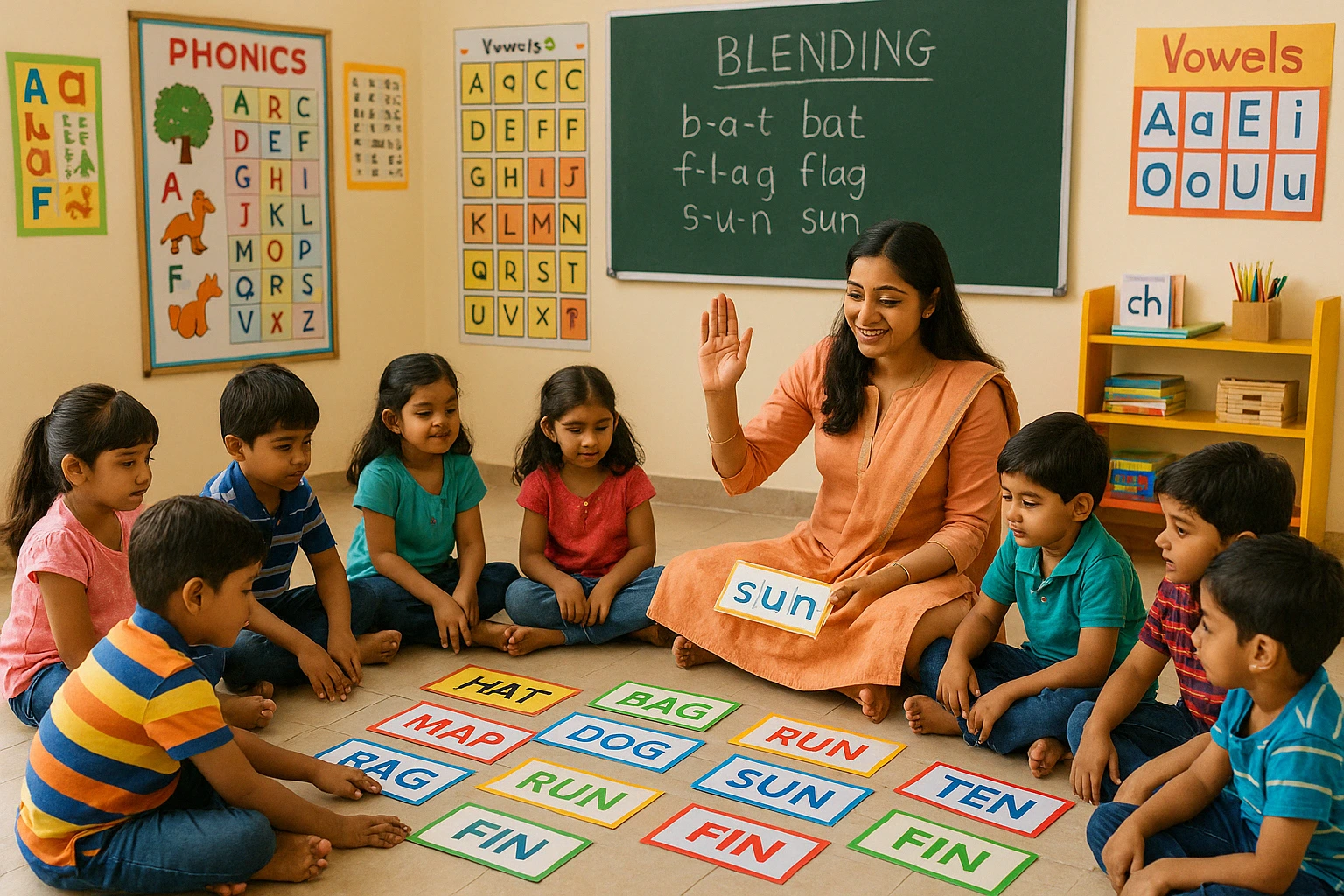
Teaching kids how to link sounds to letters is the first step towards being able to read and write well. Phonics Sounds and Letters are very important for helping young children understand how spoken language and written text go together. Parents and teachers can help Kids Learn to Recognize Sounds, connect them to the right letters, and slowly build words by using simple steps and fun activities. Phonics Sounds and Letters help kids learn to read and write by teaching them to decode words. They also help kids feel good about themselves, which makes early literacy a fun and easy process.
Table of Content
Why Phonics is Trickier than it Sounds?
Sounds and Letters may seem easy at first, but teaching and learning them can be trickier than you think. The process is more complicated than just connecting letters to sounds, even though it lays the groundwork for reading and writing.
Let us see Why Phonics is Trickier than it Sounds:
- One letter can make more than one sound: One letter can make more than one sound. For example, the letter “a” can sound different depending on the word. People who are just starting might find this confusing.
- Same sound, different spellings: Words like “rain” and “day” have an identical long “a” sound, but they are spelled differently.
- Silent letters: Words like “knight” and “lamb” have letters that are written but not spoken, which makes things even harder.
- Blending challenges: Kids who are just starting to learn may be able to tell the difference between sounds but have trouble putting them together into words.
- Accent and pronunciation differences: Kids’ regional accents can change how they hear and make sounds, which makes things even harder.
- Exception words: Many English words don’t follow Sounds and Letters rules, so you have to memories them instead of figuring out what they sound like.
Phonics Sounds and Letters is a great way to help kids learn to read and write, but it can be tricky to comprehend. They need to be patient, practise a lot, and learn in different ways to make sure they really get it.
Phonics Vs. Memorization: Why Sound-Based Learning Wins
Phonics and memorisation are two standard ways to train young children how to read and write. Sounds and Letters teach kids how to interpret words by linking sounds to letters, while memorisation concentrates on learning whole words by heart.
Phonics Vs. Memorization: Why Sound-Based Learning Wins:
- A better start: Phonics Sounds and Letters teach kids how to use sound rules to interpret words. This is better than memorising, which only helps them retain words they’ve already come across.
- Better reading fluency: Kids read faster and more precisely when they can hear sound patterns.
- Better spelling skills: If kids know how sounds are associated with letters rather than just remembering what letters look like, they can spell on their own.
- Improved confidence: Sounds and Letters help kids learn new words easily, but memorizing them can make them angry when they come across new words.
- Long-term retention: Learning through sound helps you understand things better, while memorizing things often leads to forgetting words over time.
Phonics Sounds and Letters teach kids how to read, spell, and decode words on their own, which will help them read and write for the rest of their lives. Memorisation may work for a while, but it can’t handle the intricacy of language.
For details of Phonics Course for Teachers, Call / Whatsapp on +918104606573 / +919869546913.
Click Here, to download the brochure of Phonics Course for Teachers!

Source: theguardian
Common Phonics Challenges
Phonics Sounds and Letters is a great way to help kids learn to read and write, but many of them run into problems along the way. If you don’t deal with these Common Phonics Challenges with patience and the right strategies, it can slow down progress.
Some Common Phonics Challenges children often experience include:
- Letter-sound confusion: Some letters, like b and d or p and q, look a lot alike and are frequently confused.
- Blending difficulties: Kids may be able to tell sounds apart, but it can be hard to put them together to make words.
- Silent letters: Some words, like knight and comb, have letters that aren’t enunciated, which can be confusing for people who are learning.
- Multiple sounds for one letter: One letter can make more than one sound. For example, the letter “c” in “cot” and “circle” can make different sounds, which can be illogical.
- Exception words: There are numerous examples of English words that don’t follow phonics rules and need to be memorized.
- Not adequate practice: Kids might forget or use their Phonics Sounds and Letters skills incorrectly if they don’t get enough practice.
Recognising these Common Phonics Challenges early on helps teachers and parents give kids the suitable kind of help, which keeps them interested and helps them slowly become eloquent readers.
How to Teach Phonics Sounds and Letters?
An organized method of teaching Sounds and Letters helps kids learn how to associate sounds with letters and slowly build words. When you do a combination of fun things and practise a lot, learning is fun and works best.
Here are some simple approaches to Teach Phonics Sounds and Letters:
- Start with basic sounds: Begin with the basic consonants and vowels, then move on to more intricate combinations.
- Use pictures to help retain: Flashcards, charts, and alphabet mats are all fantastic tools for this.
- Incorporate repetition: Kids need to practise frequently what they’re learning to ensure that they don’t forget it.
- Blend sounds into words: Show the way distinct sounds come together to form simple words.
- Add games and songs: Delightful ways to learn keep kids interested.
As long as kids are patient and creative, Phonics Sounds and Letters lessons will help them get better at reading and spelling over time.
For details of Phonics Course for Teachers, Call / Whatsapp on +918104606573 / +919869546913.
Click Here, to download the brochure of Phonics Course for Teachers!
Progress to Hearing a Short Sequence of Sounds
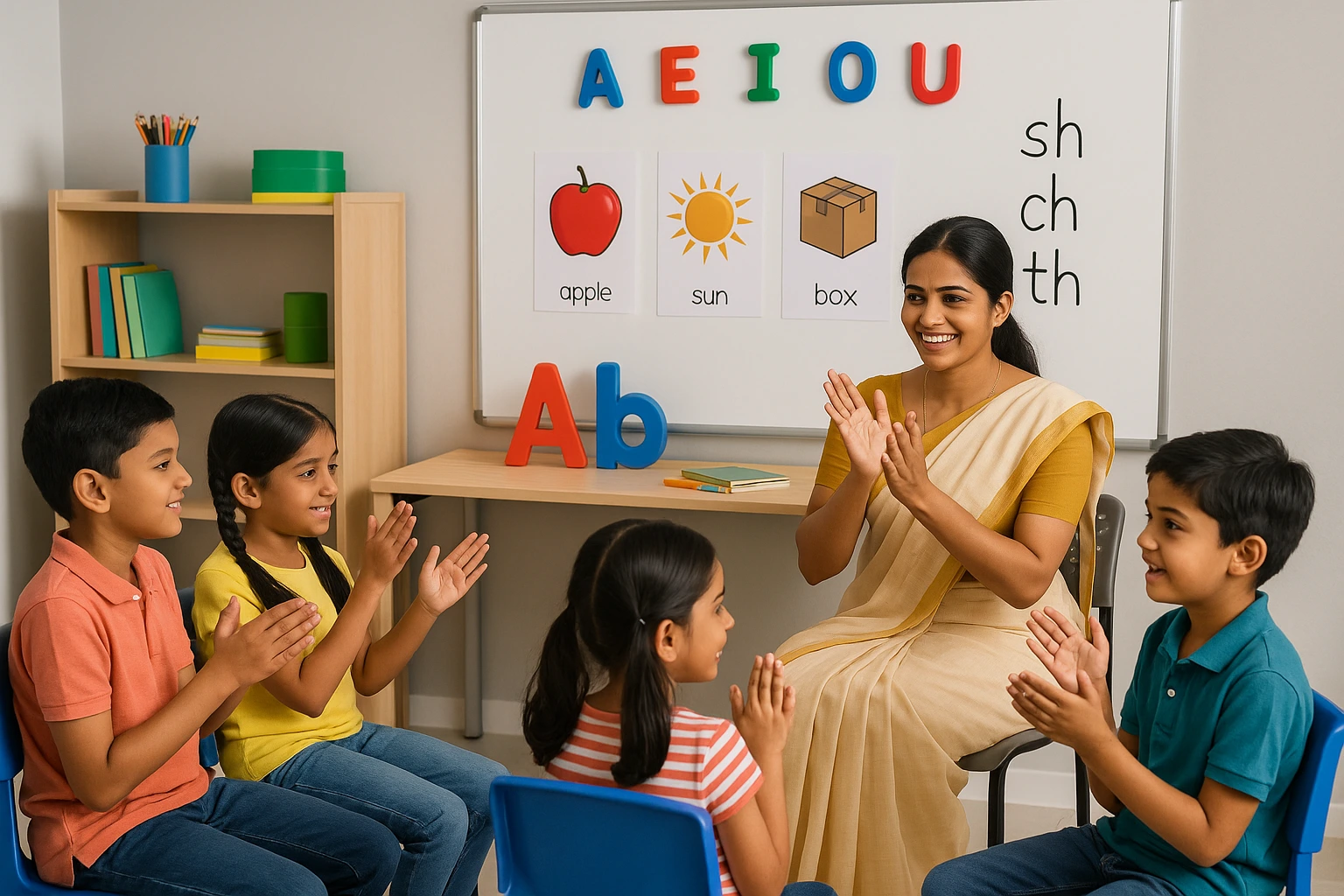
A key part of early Phonics Sounds learning is learning how to hear and acknowledge sound patterns. This skill helps kids see patterns in language, which helps them read and blend later on. The Progress to Hearing a Short Sequence of Sounds should be slow, starting with single sounds and moving on to simple sound sequences in a way that feels natural and interesting.
Key strategies to support Progress to Hearing a Short Sequence of Sounds:
- Begin with one sound at a time: Before putting sounds in order, make sure kids can tell the distinction between them.
- Introduce pairs of sounds: To help kids learn to identify sounds, have them practise with two sounds, like s and t.
- Use clapping or tapping: To help you retain what you hear, make sounds and rhythms go together.
- Play listening games: Play games that involve listening, like “What sound comes foremost?” Make learning enjoyable.
- Encourage repetition: Doing something over and over again helps you retain it and sequence it.
Kids are ready to confidently put letters together to make words that have meaning when they learn how to put short sound sequences together.
Make Learning Phonics Sounds and Letters Fun
Lessons that comprise games and creative activities make it more effortless to Teach Phonics Sounds to young children. Kids learn things quickly when they appreciate doing them, and making Phonics Sounds and Letters Fun helps them retain what they learnt and stay involved. Parents and teachers can Teach Phonics Sounds to kids from the start by using both methodical and interactive approaches. The Vidhyanidhi Education Society (Govt. Regd.) has a Phonics Teacher Training Course that trains teachers in established ways to Teach Phonics Sounds and Letters.
Here are some fun ways to Make Learning Phonics Sounds and Letters Fun:
- Interactive games: Use puzzles, board games, or pairing cards to associate sounds and letters in interactive games.
- Music and rhymes: Songs and recitations help kids recall sounds and keep lessons exciting.
- Using phonics words in narratives: Adding sounds to simple narratives makes learning more eloquent.
- Practical activities: Let kids make letters out of clay, sand, or letter blocks while they enunciate the sounds.
- Digital apps and videos: Digital tools like phonics apps and videos can make things more fun and get kids interested.
The Phonics Teacher Training Course stresses how important it is to make learning fun so that kids can learn to read well. Teachers can gain the confidence to make Phonics Sounds and Letters lessons fun, interactive, and useful by taking the Phonics Teacher Training Course.
Master Phonics & transform young readers! Join Vidhyanidhi Education Society’s Phonics Course for Teachers today!
For details of Phonics Course for Teachers, Call / Whatsapp on +918104606573 / +919869546913.
Click Here, to download the brochure of Phonics Course for Teachers!
FAQs
Are Phonics Just for Reading or also Speaking?
Phonics helps with both reading and speaking because it explains how to make sounds correctly, which helps with adept speech and better communication.
How long does it take to Master Phonics Sounds A to Z?
Children typically learn the phonics sounds A to Z in six days if they practise every day. The Vidhyanidhi Education Society gives proficient advice.
