



What Phonics Means and How to Teach Phonics?
Source: ruthmiskin
What Phonics Means and How to Teach Phonics?
Phonics Means becomes clearer when we see how it helps children connect sounds to letters in a structured, easy-to-understand way. Parents and Educators often search for simple methods to explain What Phonics Means, especially when guiding young learners through early reading steps. Phonics builds the base for confident reading by showing how each sound blends to form words. When taught with engaging activities, clear instructions and consistent practice, it turns the learning process into something enjoyable and effective for every child.
Table of Content
How do you Teach Phonics Step by Step?
Phonics doesn’t have to be hard. Kids may easily go from listening to sounds to reading words with confidence when learning is broken down into easy, well-organized phases. This is a simple, step-by-step guide to making phonics instruction work.
Step 1: Develop Phonemic Awareness
- Before teaching letters, make sure your child can hear sounds.
- Play activities that rhyme, such saying “cat” and asking your child to discover a word that rhymes with it, like “bat” or “hat.”
- To separate the first sounds of a word, extend the first sound (for example, /h/ /h/ /h/ hat).
Step 2: Introduce Letter Sounds and Names
- Teach how each letter sounds and how it relates to the sound it creates.
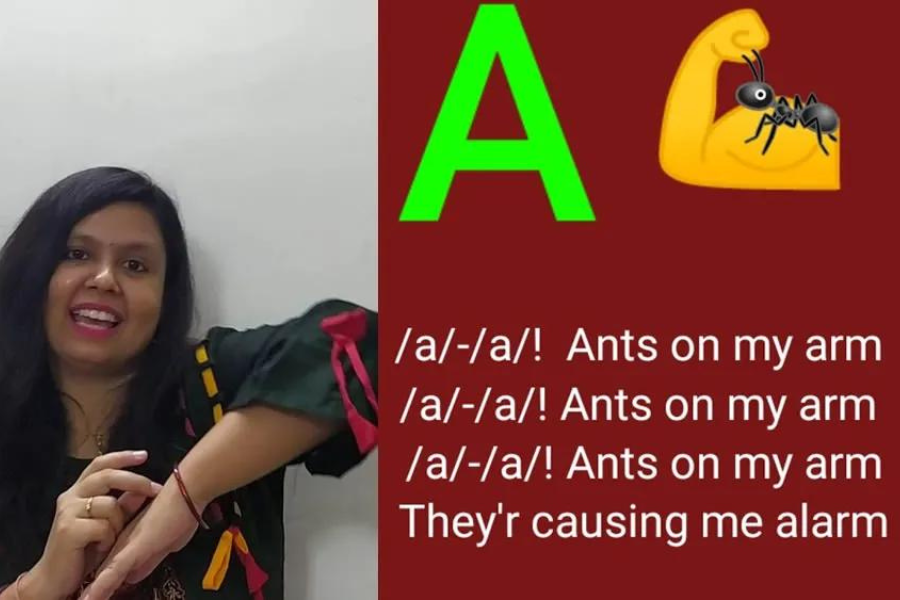
- For example, “This is S.” It makes the sound /s/. “S” stands for “sun.”
- Start with sounds that are simple to say, such f, m, n, r, and s.
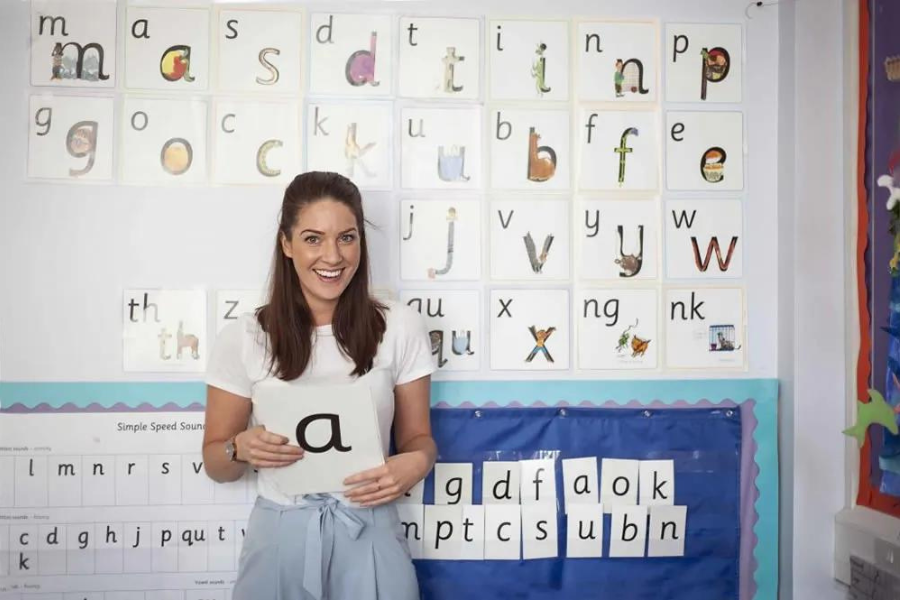
- Use flashcards, graphic charts, and labelled things around the room to help you learn more.
Step 3: Practice Blending Sounds
- After learning a few sounds, show kids how to put them together to build simple words.
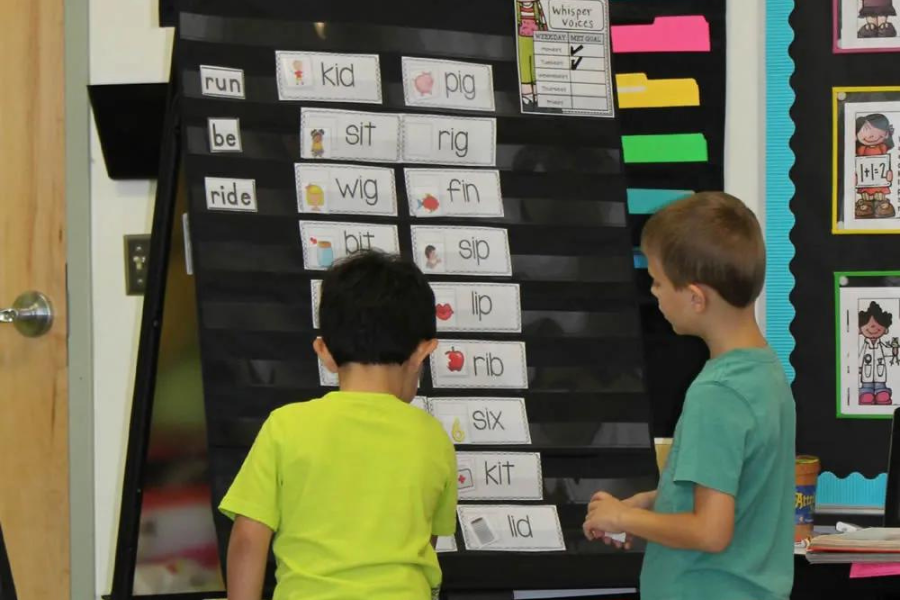
- Begin with simple CVC Words like “sat,” “pin,” and “tap” that are easy to mix.
- To build a whole word, link each sound to an action and then blend the sounds and actions together.
Step 4: Decode New Words
- Teach digraphs like sh, ch, and th, where two letters make one sound.
- Show children how to tackle longer words by introducing consonant blends such as st, sl, spl, and str.
- Progress to trickier patterns, including vowel teams (ea, ai) and silent-e words (for example, cake).
Step 5: Reinforce and Apply Learning
- Make sure you practice every day for around 15 minutes.
- Before adding new sounds and words, go over the old ones.
- Set aside time for your kid to read easy texts and for you to read aloud to show them how to read fluently.
- Teach sight words, which are words that don’t obey phonetic rules, to help kids read more smoothly.
By following these steps, phonics learning becomes steady, engaging, and effective for early readers.
To download the brochure about Phonics Course, Click Here!
Call or Whatsapp on +919869866277 / +919869546913, for details of Phonics Course!

Source: cdnparenting
What is the Correct Order to Teach Phonics?
Starting with simple sounds and slowly moving on to more difficult ones gives them a strong basis and supports their growing confidence and skills. Teaching phonics step by step helps kids learn to read with clarity and confidence.
Here is the correct order to teach phonics in a structured and effective way:
Start with phonemic awareness
Kids should first learn to hear, identify, and play with sounds in spoken words.
Teach letter-sound relationships
Start by teaching letter-sound connections with simple, easy-to-pronounce sounds like m, s, a, t, p, and n before introducing the other letters.
Introduce blending
Once kids know a few sounds, show them how to put them together to read basic CVC words like “cat” or “pin.”
Move to segmenting
Help kids with spelling by teaching them how to break words into individual sounds.
Add digraphs and consonant blends
Teach kids new sounds like “sh,” “ch,” and “th,” as well as fun blends like “st,” “bl,” and “cr.” This will make it easier for them to read more words.
Teach vowel teams and long vowel patterns
Show them patterns like ai, ee, oa, and the silent e.
Include tricky words
Add high-frequency words which are not phonetic and that kids have to remember by sight one at a time.
This step-by-step approach supports a smooth journey toward confident, fluent reading.
To download the brochure about Phonics Course, Click Here!
Call or Whatsapp on +919869866277 / +919869546913, for details of Phonics Course!
Source: maloointernationalschool
There are two methods to teach phonics: synthetic phonics and analytic phonics. Both strategies help kids learn how to make words, also help in different ways.
Synthetic Phonics
Method
Kids when they learn to identify letter or group of letters with sounds (Phonemes).They are then able to read the complete word by blending the sounds.
Example: Practising the sounds /c/ /a/ /t/ and blending them to make the word cat.
Focus
Builds strong phonemic awareness and helps young kids to decode unfamiliar words by sounding them out.
Analytic Phonics
Method
Kids begin with whole words they already know. Then, encourage kids to break words down, spot thepatterns and sound relationships.
Example: Looking at the word cat and recognizing that c, a, and t form a pattern seen in bat or hat.
Focus
Give importance to spotting larger units such as word families and common spelling patterns to make reading more intuitive.
Both approaches help in enhancing reading, for early learners synthetic phonics is preferred as it follows systematic design.
To download the brochure about Phonics Course, Click Here!
Call or Whatsapp on +919869866277 / +919869546913, for details of Phonics Course!
Source: tunstallsteachingtidbits
What are Some Common Phonics Mistakes?
Even though teaching language is good, some common mistakes may make it harder for kids to read. These things will help you learn more quickly.
Common Phonics Mistakes
Skipping phonemic awareness
- Some children struggle because they are introduced to letters before learning to hear and identify sounds.
Introducing too many sounds at once
- Teaching several sounds in a single session can overwhelm young learners.
Not practicing blending enough
- Children need consistent blending practice to read full words confidently.
Teaching letter names before sounds
- Focusing only on letter names can confuse early readers who need sound recognition first.
Ignoring tricky words
- Some high-frequency words don’t follow phonetic rules. Avoiding them makes reading harder later.
Using the same activity repeatedly
- Repetition is useful, but using only one method can lead to boredom and slower progress.
Rushing to advanced patterns
- Moving too quickly to digraphs or vowel teams before mastering basic sounds can cause confusion.
To build strong foundation and gain phonics skills above mistakes need to be avoided.
To download the brochure about Phonics Course, Click Here!
Call or Whatsapp on +919869866277 / +919869546913, for details of Phonics Course!
Source: bilingualkidspot
How to Teach Tricky Words in Phonics?
Words that are hard to say can be hard because they don’t always follow the rules of sound. If you teach kids these words in a simple and consistent way, they will learn them faster, which will boost their confidence and make reading easier.
How to Teach Tricky Words
Introduce the regular and irregular parts
First, focus on the sounds that follow normal phonics patterns, and then draw attention to the non-phonetic part.
Use visual cues
Underline or colour the tricky part so children remember what makes the word different.
Say the word, don’t sound it out
Encourage learners to read the word as a whole instead of trying to decode each sound.
Repetition through short practice
Use flashcards, quick drills, or matching games to help reinforce recognition.
Include the words in sentences
Ask children to read or create simple sentences using tricky words to build meaning and memory.
Review regularly
Revisiting tricky words keeps them fresh and strengthens long-term recall.
With regular repetition of tricky words, kids can confidently recognize the same while reading.
To download the brochure about Phonics Course, Click Here!
Call or Whatsapp on +919869866277 / +919869546913, for details of Phonics Course!
Source: ytimg
How to Help Children Who Struggle with Phonics?
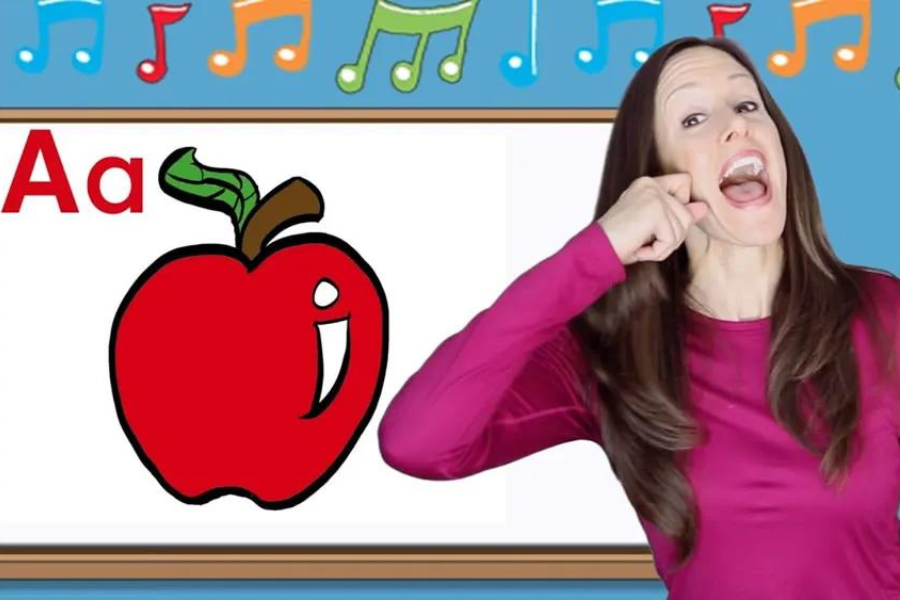
A clear, thoughtful method to teaching phonics not only makes reading easier but also supports kid’s confidence. Vidhyanidhi Education Society’s (Govt. Regd.) Phonics Teacher Training Course helps teachers guide students who need additional help.
How to help kids who face problems with Phonics
Build up phonemic awareness
Motivate kids to learn sounds through enjoyable activities like rhymes, games and fun filled listening exercises to improve their sound awareness.
Use multisensory ways
Identifying letters or associating sounds to meaning through objects, helps children learn through actions.
Break lessons into small steps
Reduce the tasks into short, easy steps to reduce anxiety which supports students to learn one skill at a time.
Provide repeated practice
Regular practice strengthens kid’s ability to blend, segment, and recognise sounds.
Offer clear visual support
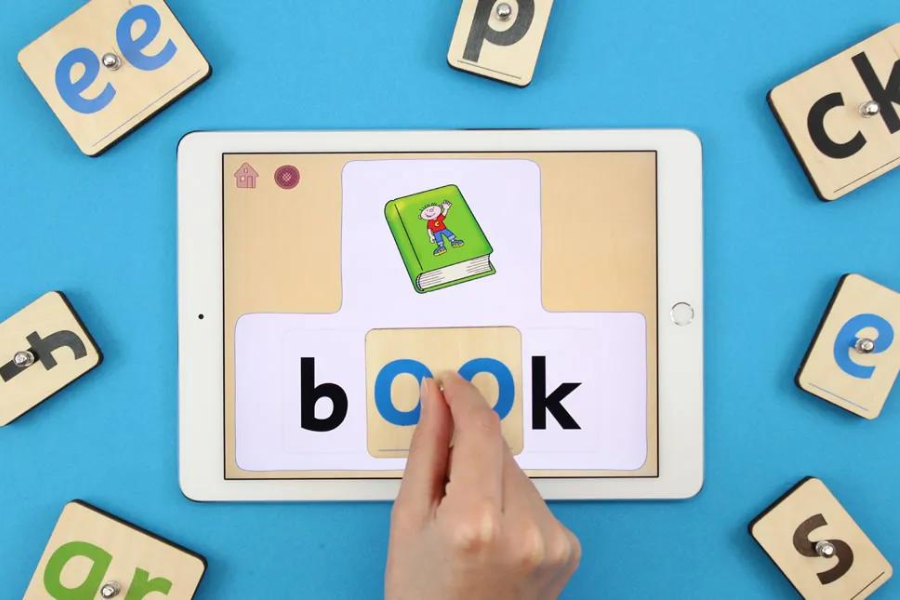
Charts, flashcards and letters tiles make learning more easily.
Review tricky words often
Repeating the tricky words number of times of boosts self-confidence by helping to remember things and lowering stress.
Phonics Teacher Training Course equips educators with the skills and knowledge to aid students who struggle with reading. Any student with appropriate support can become better over a period of time. A well-planned programme gives educator useful, interesting methods to teach phonics in enjoyable and useful manner.
Boost young readers’ skills—join Vidhyanidhi’s Phonics Course today!
To download the brochure about Phonics Course, Click Here!
Call or Whatsapp on +919869866277 / +919869546913, for details of Phonics Course!
What Phonics Means and How to Teach Phonics?
FAQs
What Age Should a Child be Speaking Clearly?
Most children speak clearly by age 4–5, though clarity continues improving as vocabulary grows.
Why does my Child Struggle with Phonics?
Kids could have trouble because they don't know how to hear sounds well, don't practice enough, or have trouble combining sounds.
What Should I Teach First in Phonics?
Begin with phonemic awareness and then go on to basic letter-sound connections like m, s, a, and t.
What is the Best Age to Start Teaching Phonics?
Ages 3 to 5 are best since that's when kids start to recognize sounds and letters. Help from the Vidhyanidhi Education Society might be helpful.
