


Why Are Phonics Important for Students?
Why Are Phonics Important for Students?
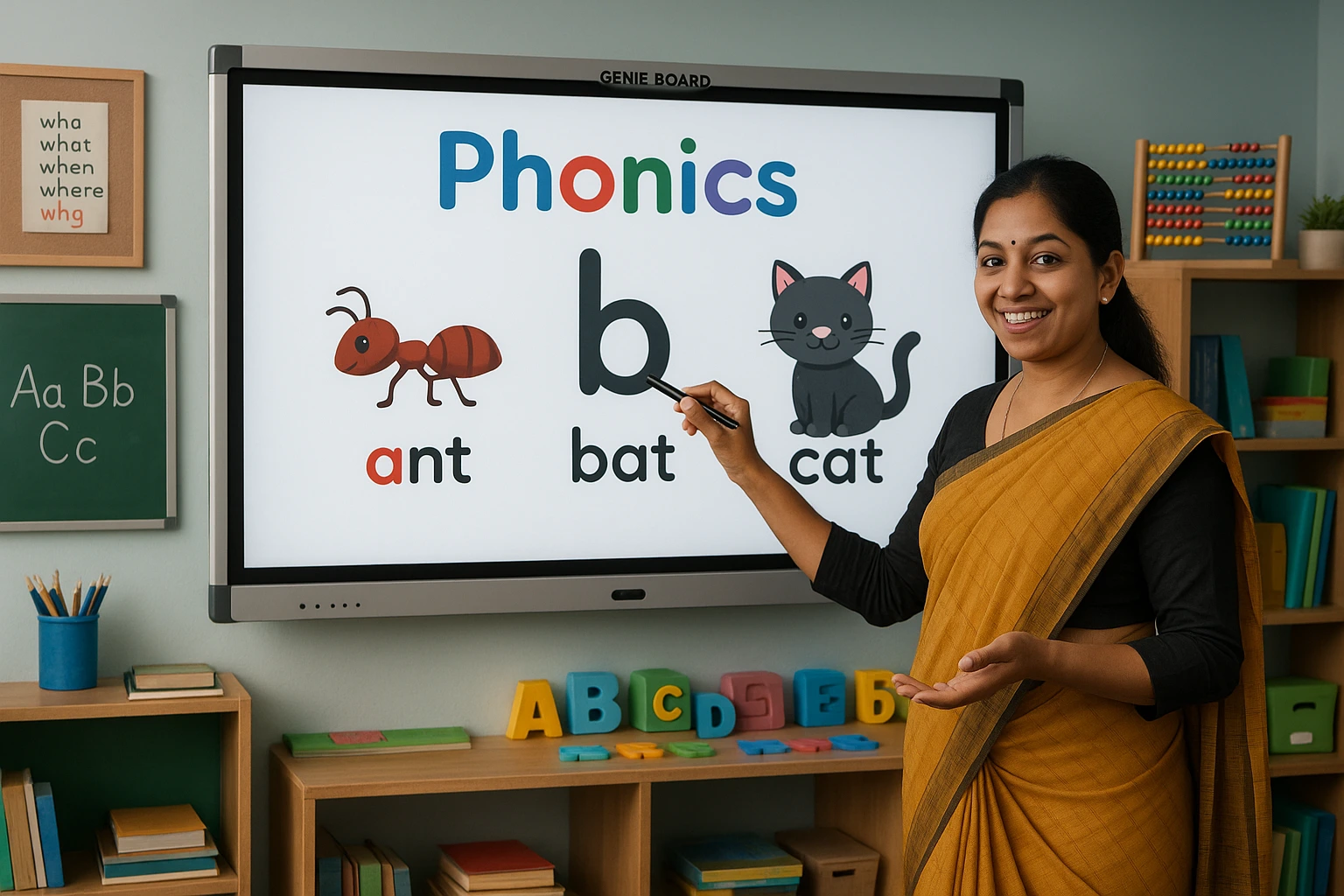
Why are Phonics important for Kids who want to be able to read and write well? Phonics helps kids learn how letters and sounds go together, which makes it simpler for them to read words properly. Knowing phonics helps pupils read more accurately and quickly because they can sound out new words instead of guessing.
This ability also helps with spelling and saying words more clearly. What Are Phonics One way to demonstrate how important Early Education is to witness how kids develop confidence as they read on their own and start to like books more as they comprehend them better.
Table of Content
What is Phonics and its Importance?
Phonics is a method of teaching reading and writing that helps children understand the relationship between Letters and the Sounds they represent. By learning how sounds match with letters, students are able to read words correctly and spell them with greater accuracy. Phonics starts early with reading and writing, it helps kids go from learning individual sounds to understanding whole words with ease.
What is Phonics?
Letter–Sound Connection
With phonics, you can learn that letters and groups of letters stand for speech sounds.
Decoding (Reading)
Kids learn to break words into smaller sounds, such as c-a-t, and blend them together to read the word “cat.”
Encoding (Spelling)
Phonics also supports writing by helping children choose the correct letters for sounds, such as understanding that the /k/ sound can be written as c, k, or ck.
Why is Phonics Important?
The Basics of Reading
Phonics teaches the essential abilities necessary to read and write well.
Identifying unknown words
The focus is on learning to read words independently rather than rote learning or guessing the word.
Helps with fluency and understanding
When kids read smoothly and correctly, they understand what they read.
Helps with spelling
It helps in spelling and writing to know how alphabets and sounds work with each other.
Increases Self-Esteem
As kids become stronger at reading and writing, they feel more confident.
Helps with Other Learning
Strong Foundation when laid for reading and writing leads to children performing well in each subject.
Phonics helps build confident, independent readers and writers by equipping with lifetime skills.
For downloading the brochure of Phonics Course, Click Here!
Call or Whatsapp on +91836 937 7157 / +9198695 46913 , for details of Phonics Course!

What Does Systematic Phonics Look Like?
Systematic Phonics constitutes a structured and progressive approach to developing reading proficiency. This methodology is characterized by a specific sequence, commencing with fundamental letter-sound correspondences and escalating in complexity. This structured approach facilitates the acquisition of Reading and Spelling skills in children, thereby minimizing potential confusion.
Key Components of Systematic Phonics
Planned Sequence
The instruction of sounds follows a logical progression, initiating with elementary letter sounds and advancing to blends, digraphs, and more intricate word structures.
Explicit Instruction
The potential for guesswork is significantly reduced, as each sound and letter pattern is explicitly and immediately taught.
Regular Practice
Children often have chances to read and spell, using the sounds they’ve already mastered.
Cumulative Learning
New skills are added while earlier sounds are regularly revised, helping children retain what they have learned.
Link between Reading and Writing
Students learn to read by putting sounds together and spell by breaking words down into sounds.
How It Appears in the Classroom
- Teachers only teach a few sounds at a time and make sure the kids know them before going on.
- Reading exercises are all about words that sound like the ones that have previously been taught.
- Spelling activities employ the same sound patterns that are used in reading.
- Progress is tracked so that lessons may be tailored to each child’s speed of learning.
Methodical phonics offers clarity and consistency in early reading instruction. By Teaching Sounds in an organized way, it supports steady progress and helps children become confident, independent readers.
For downloading the brochure of Phonics Course, Click Here!
Call or Whatsapp on +91836 937 7157 / +9198695 46913 , for details of Phonics Course!
How do we Teach Phonics?
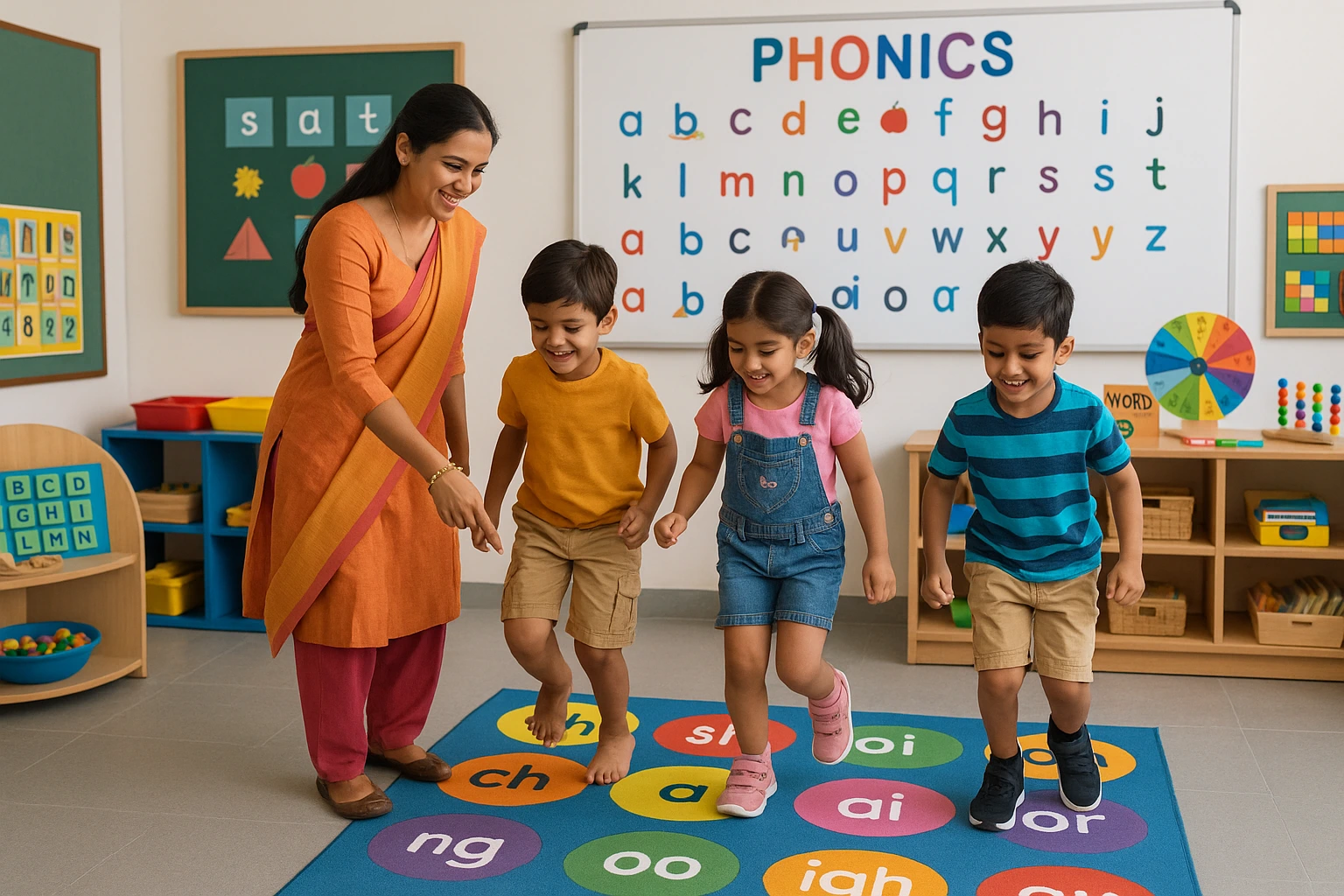
Teaching phonics involves a clear, structured approach that helps kids to connect letters with sounds and apply this knowledge to reading and writing. Effective phonics teaching is consistent, interactive and concentrated on regular skill-building so students can gain confidence step by step.
Professional teachers play an important role in phonics teaching. Correct training help teachers understand sound progress, teaching methods and student’s needs.
Phonics Teacher Training Course offered by Vidhyanidhi Education Society (Govt. Regd.) is designed to prepare teachers with practical skills and structured teaching methods.
Key Ways Phonics Is Taught
Introduce Letter Sounds Clearly
Teaching starts with separate letter sounds before moving to blends and sound patterns.
Read Blending
Kids learn how to blend sounds to form words, which helps them read confidently instead of just guessing.
Segmenting for Spelling
By breaking words into individual sounds, kids can spell more accurately and write with ease.
Regular Practice
Daily reading and spelling activities give kids the chance to strengthen the sounds and patterns they’ve already learned.
Use of Decodable Texts
Reading materials are selected based on the sounds already taught, supporting steady progress.
Revision and Reinforcement
Earlier sounds are revisited often to ensure long-term retention.
On completion of the Phonics Teacher Training Course the teachers are equipped to make lesson plans, implement classroom management methods and examine student success.
This Phonics course shows teachers how to teach sounds correctly, help students who are struggling to read and keep track of how their students are doing.
The Phonics Teacher Training Course from Vidhyanidhi Education Society (Govt. Regd.) offers teachers the confidence they need to make phonics sessions easy and exciting.
Phonics classes work better when they are planned properly and teachers have received professional training. This helps kids become better in reading and writing, which helps them do better in school overall.
Master phonics skills—join Vidhyanidhi’s Phonics Course today!
For downloading the brochure of Phonics Course, Click Here!
Call or Whatsapp on +91836 937 7157 / +9198695 46913 , for details of Phonics Course!
Why Are Phonics Important for Students?
FAQs
What Is a Common Mistake in Phonics?
Many children end up memorising words simply because they were rushed through sounds before getting enough practice to truly understand how letters and sounds work together.
Can a Child Learn to Read Without Phonics?
Some children able to read without phonics, but many struggle going ahead. This is Why Phonics is Import. It builds strong, independent reading skills.
Why Do Students Struggle With Phonics?
Phonics becomes challenging when kids are unable to get practice, clear path, and suitable guidance—something organizations like Vidhyanidhi Education Society help address.
What Is the Best Age to Start Teaching Phonics?
Best age to teach phonics is by 3 years when the child is ready to identify sounds, letters and show interest in reading development up to 5yrs.
