


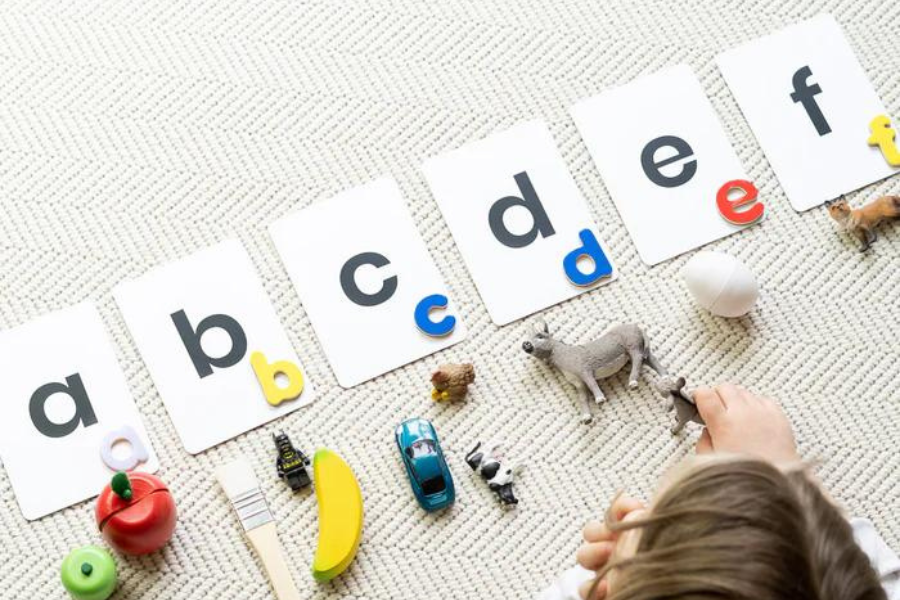
What are 44 Sounds of Phonics?
Source: happylittledoers
What are 44 Sounds of Phonics?
44 Sounds of Phonics are basic sound used in English language that helps kids learn Reading and Spelling. These sounds shows different ways letters and group of letter are pronounced. Kids learn the 44 Sounds of Phonics, which help them match letters with their right sounds more easily. So, they can read words with more trust and better understand how language works.
Simple, step-by-step learning of these sounds also helps kids see trends in words, mix sounds more easily, and improve how they say words. Knowing the 44 Sounds of Phonics well from a young age helps with reading, writing, and language growth in general.
Table of Content
What is a Phoneme?
A Phoneme is the smallest unit of sound in a language that can change the meaning of a word. For example, the words cat and hat are different because the first sound changes from /k/ to /h/.
This shows the distinctive function of phonemes – change just one phoneme and you have a new word with a new meaning. Phonemes are usually written between slashes, for example /k/ in cat, /s/ in sun or /ch/ in chip.
Key points about phonemes
Phonemes vs. graphemes
Phonemes are sounds, while graphemes are the letters or letter groups that represent those sounds (like /f/ written as f in fan or ph in phone).
Allophones
One phoneme can sound slightly different without changing meaning. For example, pat has a puff of air accompanying the /p/ , but spat does not – still, both words use the same phoneme /p/ .
How many phonemes in English?
English has about 44 phonemes, even though it uses only 26 letters, since letters can combine to represent many sounds.
Understanding phonemes helps kids to combine sounds for reading, and segment sounds for spelling, making phonics learning clearer and more accurate.
To Download Brochure of Phonics Course, Click Here!
For more details of Phonics Course Call / Whatsapp +918369377157/ +919869546913
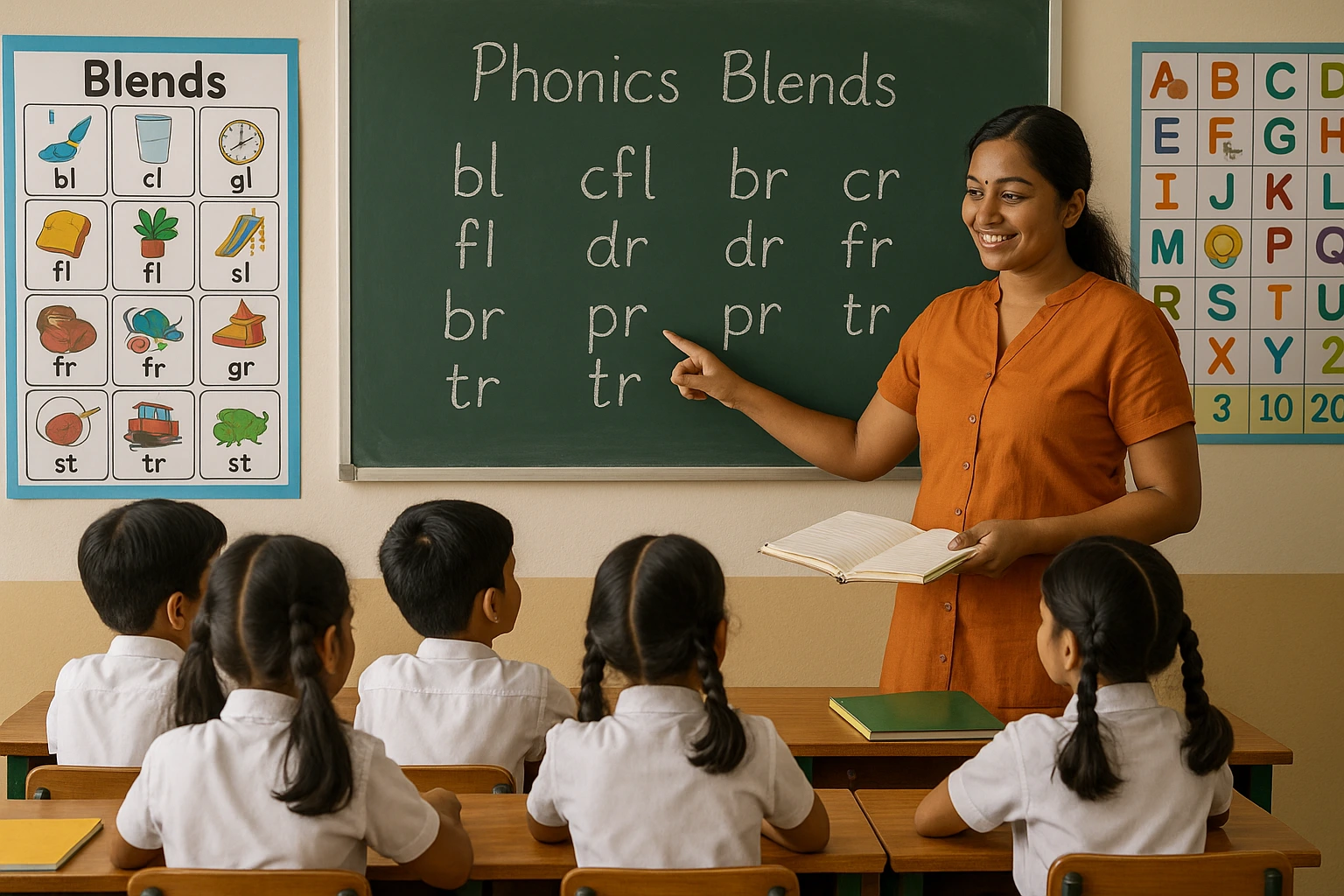
What is a Grapheme?
A Grapheme is the tiniest unit of written language that represents a single sound, or phoneme, in a language. It can be a letter or a group of letters which work together to represent a sound. For example “t” in top, “ch” in chip and “igh” in light are all graphemes. Whereas phonemes are sounds we hear, graphemes are written symbols we see on the page.
Key features of graphemes:
Examples: The word ship has three graphemes — “sh”, “i”, and “p” — even though it contains four letters.
Structure
- Single letter: a in apple
- Digraph (two letters): sh, ch
- Trigraph (three letters): igh in night
Variation
One sound can be represented in different ways. The /f/ sound appears as f in fish, ff in puff, ph in phone, and gh in enough.
Not always one letter
A grapheme may include more than one letter but still represent just one sound.
Graphemes are very important in phonics because they help link written letters to spoken sounds. When students learn how graphemes and phonemes match up they will be able to read unfamiliar words more easily and become better spellers.
To Download Brochure of Phonics Course, Click Here!
For more details of Phonics Course Call / Whatsapp +918369377157/ +919869546913
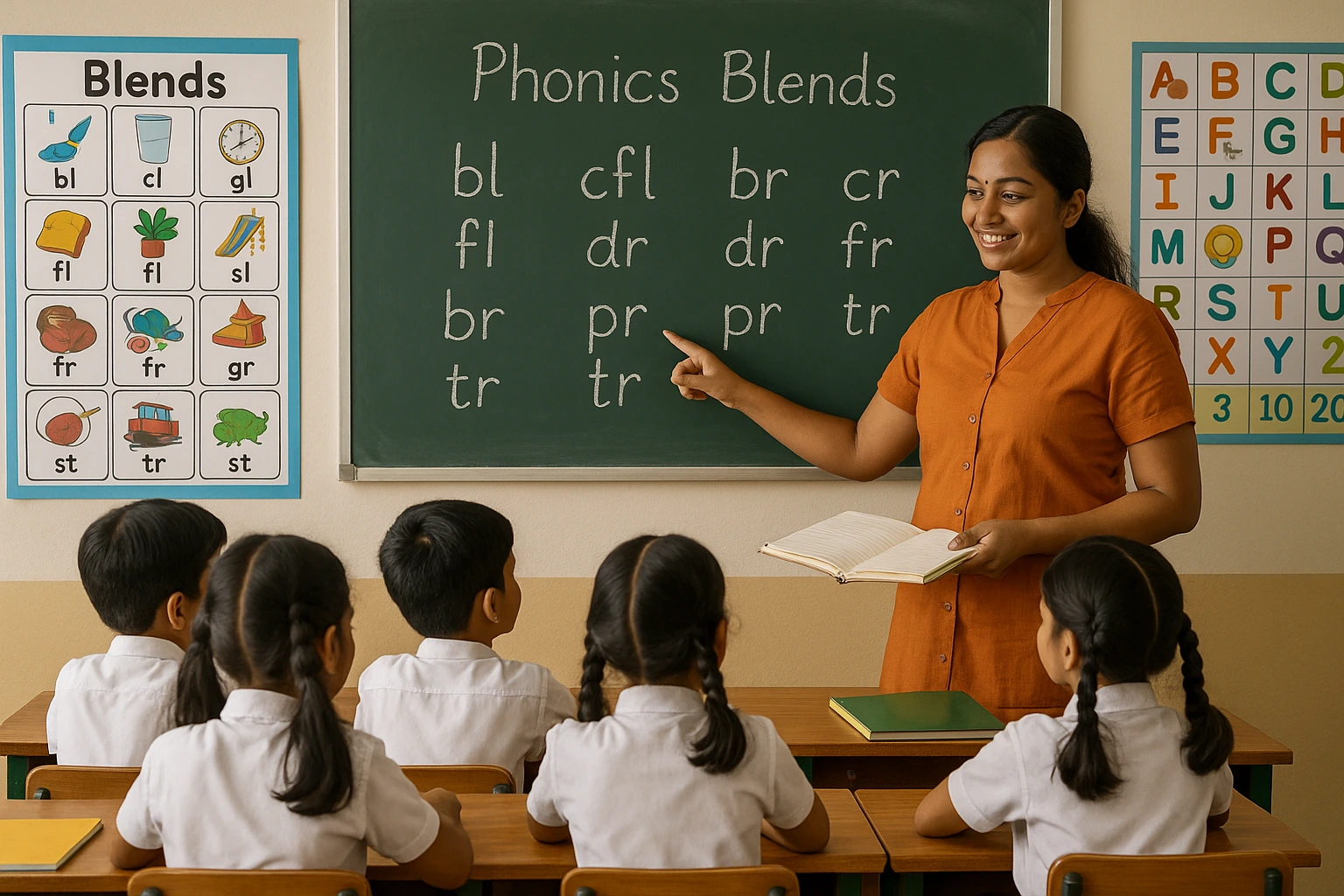
What are 44 Sounds of Phonics Divided Into?
In English phonics, the 44 sounds (phonemes), which are the distinct units of sound that form spoken words. These sounds are written using the 26 letters of the alphabet as well as combinations of letters (graphemes) like sh, th, ee, etc.
The 44 phonemes can be broken down into two main groups: vowels and consonants. The Sounds in these groups are further divided by how they are made.
Consonants
-
- Single Consonant Sounds – Sounds made when airflow is blocked or restricted (e.g., /b/ in bat).
- Consonant Digraphs – Two letters that make one consonant sound (e.g., sh, ch, th).
Consonants include sounds like /b/, /d/, /f/, /sh/, and /th/. Many of these involve one letter or two letters working together to create a sound.
Vowels
-
- Short Vowel Sounds – Vowels with a short sound (e.g., /a/ in cat).
- Long Vowel Sounds – Vowels that say their name (e.g., /ee/ in see).
- Diphthongs – Vowel sounds where two sounds glide together (e.g., /oi/ in boy).
- R-controlled Vowels – Vowels influenced by r (e.g., /ar/ in car).
Vowel Sounds include both short and long vowels, as well as diphthongs where the mouth shape changes (for example /ow/ in cow), and r-controlled vowels where the presence of r shifts the sound (for example /er/ in her).
Examples of Phoneme Groups
- Consonant Digraph: ch as in chip
- Short Vowel: /e/ as in pen
- Long Vowel: /ai/ as in rain
- Diphthong: /ou/ as in out
- R-controlled: /or/ as in fork
The pupils learn 44 phonemes, consonants and vowel sounds, that help them connect the letter names to the sounds they hear, making reading and writing simpler and more precise.
To Download Brochure of Phonics Course, Click Here!
For more details of Phonics Course Call / Whatsapp +918369377157/ +919869546913

Tips for Teaching Phoneme Sounds: Letters and Sounds
Teachers with knowledge of a connection between sounds and letters are better at teaching phoneme sounds. Phonics Teacher Training Course is carefully organized to make teachers clear in teaching letters and sounds in a methodical approach. Strong foundation in phoneme awareness enable kids to decode words with confidence and improve spelling accuracy.
Key Tips for Teaching Phoneme Sounds
Start with Individual Sounds
Introduce one sound at a time. For example, teach /s/ as in sun and /m/ as in mat before forming words.
Use Multi-Sensory Techniques
Combine visual cards, actions, and sound repetition. For instance, children can trace the letter b while saying /b/ as in bat.
Teach Blending and Segmenting
- Blend sounds to form words: /c/ /a/ /t/ → cat.
- Segment words into sounds: dog → /d/ /o/ /g/.
Introduce Digraphs Gradually
Explain that sh makes one sound as in ship, and ch as in chair.
| Teaching Focus | Example | Activity Idea |
| Short Vowels | /a/ in apple | Sound matching cards |
| Consonant Digraphs | th in this | Picture sorting |
| Blending | sun | Sound tapping |
A good phonics teacher training course gives teachers proven methods to run their classes, organize sounds, and fix mistakes. Vidhyanidhi Education Society (Govt. Regd.) offers Phonics Teacher Training Course that gives teachers the skills they need to confidently deal with early reading problems.
Patience, practice, and well-thought-out plans are needed to teach phoneme sounds. Repeated hearing, reading, writing and saying sounds makes the learning continuous and meaningful. A Certified Phonics Teacher Training Course improves teaching practices and promotes higher reading results for early learners.
Master Vidhyanidhi Education Society’s Phonics Course! Enroll Now.
To Download Brochure of Phonics Course, Click Here!
For more details of Phonics Course Call / Whatsapp +918369377157/ +919869546913
FAQs
How Many Ways Can You Spell The 44 Phonemes?
The 44 Sounds of Phonics can be spelled over 250 ways, like /ee/ in see, sea, key, me.
Which Sounds To Teach First?
Start with basic, continuous sounds like /s/, /a/, /m/, /t/ that can be readily blended into words like sat and mat.
What Is The Best Age To Learn Phonics?
Most kids begin phonics at ages 3-5, when they are able to identify alphabet letters and repeat basic sounds accurately.
Can I Teach My 2 Year Old Phonics?
Yes, through songs and sound play. Formal teaching can follow later. Vidhyanidhi Education Society also guides teachers on phonics methods.

[…] Phonics Sounds are the specific sounds that individual letters or letter combinations make in the English language. They help children learn how spoken sounds connect to written letters and words. […]