


What Learning Disabilities Means?
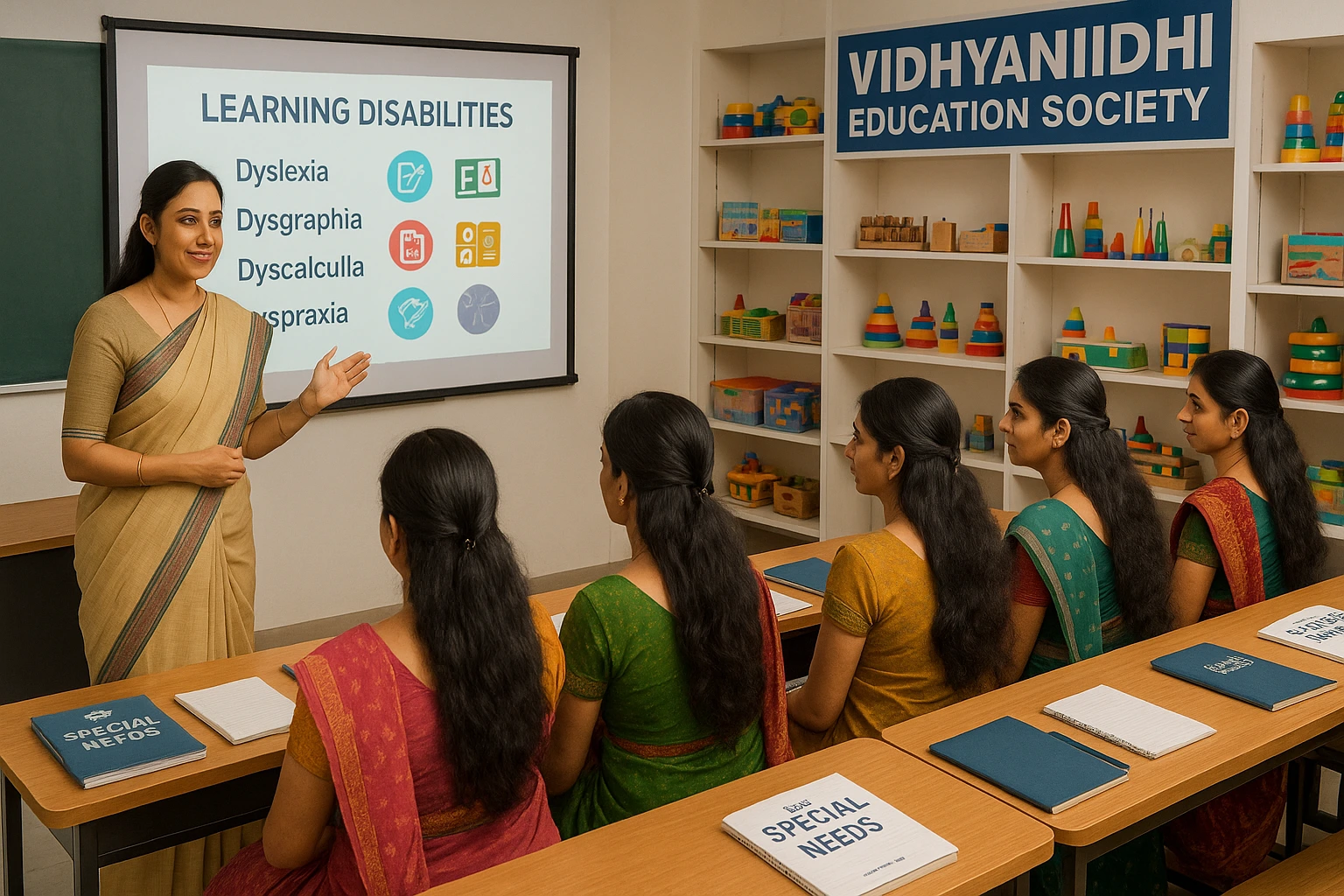
What Learning Disabilities Means?
Learning Disabilities are not only about struggling with homework. It’s about how some kids and adults learn differently. Learning disability is a brain condition leading to differences in storing information, decoding words, and acquiring knowledge. These differences may impact reading, writing, math, memory, or even attention, but they do not represent a person’s IQ or potential.
Learning disabilities cannot be treated permanently, but it improves or fade away with the help of right-time support, encouragement, and effective teaching methods. Individuals with learning disabilities can thrive and succeed in academics as well as in everyday life.
Table of Content
Common Types
Different people with learning disabilities are affected in different ways. Knowing the most common types helps people get the right support. These conditions have an effect on certain areas of learning and development, but do not reflect overall intelligence. Effective management of these difficulties depends on early detection and intervention.
Typical forms of learning difficulties include the following:
- Writing disability is also termed dysgraphia; children face extreme difficulty in spelling, forming sentences, organizing thoughts while writing, poor handwriting, and grammatical challenges.
- Reading Challenge Known as Dyslexia, where students find difficulty in reading complete sentences, are unable to decode words, display slow reading, and face challenges in interpreting written words.
- Mathematical challenges, popularly known as dyscalculia. Here, students encounter arithmetical challenges, difficulty in calculations, understanding numbers, and trouble understanding math concepts.
- Auditory Challenges is a type of disability that makes following verbal instructions difficult. Students finds hard to remember new spoken words, understand auditory sounds, and learn from listening skills.
- Visual Processing disorder is a type of disability that limits the connection between visual interpretation and cognitive understanding.
With the Learning Disability Course, interested candidates gain comprehensive knowledge of several types of learning disabilities, their causes, and significant supportive measures to be applied.
To Download the Brochure of the LD Course, Click Here!
For more Details of the LD Course, Call / WhatsApp on +919321024137 / +919869866277

What is not Learning Disabilities?
Several other disabilities are associated with academic limitations, but are not entirely termed as learning disabilities. Understanding them better eliminates confusion and facilitates suitable support.
Sensory Impairment
Children with poor hearing and vision who are not corrected with glasses can face academic challenges, but do not qualify for learning disabilities.
Emotional Issues
Anxiety, depression, and low confidence, or any other emotional issues, are determined as separate concerns and not a learning disability.
Behavioural challenges
Aggressive behaviours, limited social connections, and displaying tantrums are subjected out of learning disabilities.
Autism
It is a neurological condition that affects communication and social relations. It is separated from a learning disability.
Not every special need is considered a learning disability. But it can appear alongside other psychological conditions. With the LD Courses, participants learn the differences of various challenges and learning disabilities in detail.
Causes and Risk Factors
Learning disabilities are a neurological condition that affects learning capabilities, skills acquisition, and the understanding of information of an individual. A combination of factors is also responsible for limiting the learning capacity of a person.
Detailed risk factors are mentioned below:
A child born underweight or with a premature birth can be significantly affected by a learning disability.
Neurological Cause
The primary causes of learning disabilities are dysfunction or irregular neurological development. The difference in cognitive functioning slows down the process of storing information.
Genetic factors
It is commonly seen in children whose parents or family members were affected with LD conditions. It runs through genes rapidly.
Environmental factors
Exposure to toxins in Early Childhood, poor environmental settings, or severe injury might lead to LD.
Education or Social factors
Lack of educational access to students, bad childhood experiences, and regular change of school might eliminate the interest in learning.
Understanding these causes and risk factors helps caregivers and teachers to apply right-aligned strategies to make learning smooth for such a student with LD. Pursuing a dedicated Learning Disability Course will equip you with a deeper study of causes and treatment techniques.
To Download the Brochure of the LD Course, Click Here!
For more Details of the LD Course, Call / WhatsApp on +919321024137 / +919869866277

How to Diagnose Learning Disability?
Diagnosing learning disabilities at the right time is essential to provide children with suitable support without delay. A particular symptom or test cannot identify a learning disability; a comprehensive series of evaluations is required.
Here are the steps involved in diagnosing a Learning Disability:
Early recognition of Symptoms
It begins with parents and teachers noticing the early symptoms, such as poor memory in a child, low academic performance and struggles in reading and writing.
Checking medical & family history
Understanding family history helps to diagnose learning disabilities better. Sometimes it runs in the genes; even checking the medical history of an individual provides information about any childhood injury.
Psychological tests
It involves testing the memory retention, problem-solving skills, and writing speed through a series of activities.
Educational evaluation
Teachers conduct an assessment of reading, writing, and problem-solving skills based on age and aligned grade.
Determining additional causes
It includes checking birth-related complications, childhood trauma, medical issues, and environmental factors. Considering these additional factors in diagnosing learning disabilities is crucial.
A combined evaluation of these factors helps accurately identify the type of learning disabilities and provide individualized support.
What Support can be provided for Learning Disabilities?
Students with Learning Disabilities can achieve academic success and build social relations if they are supported with suitable
Parental Support
Significant change happens when family support is involved. Parents need to understand and encourage children with learning disabilities. Constant push and appreciation improve the confidence of a child.
Educational Backing
Teachers and educators provide additional time to complete writing tasks, use multisensory teaching tools, regularly assess students’ progress, and encourage them with repeated practice. They adjust instruction techniques to match the pace of students with learning challenges.
Positive Classroom Environment
Creating an inclusive, encouraging, and positive learning atmosphere is crucially beneficial in improving academic challenges.
Technological Help
With the advancement in technology, many tools have emerged that make maths and reading flexible for children with learning disabilities.
Early identification and structured methods play an important role in improving results. Enrolling in Vidhyanidhi Education Society’s (Government-Registered) Learning Disability Course, parents, guardians, teachers, and caretakers are better placed to support the children. Participants who complete a learning disability course are equipped to design inclusive classrooms and promote significant advancement.
Transform futures—join Vidhyanidhi Education Society’s LD Course today!
To Download the Brochure of the LD Course, Click Here!
For more Details of the LD Course, Call / WhatsApp on +919321024137 / +919869866277
What Learning Disabilities Means?
FAQs
At What age should a Child be tested for a Learning Disability?
A child can be tested as early as 5–7 years when consistent learning struggles appear in reading, writing, or math across different settings.
What is the Best Treatment for a Learning Disability?
The best treatment includes tailored teaching approaches, therapies, and trained teachers. Instead, there are neurological differences that affect how the brain processes information. Vidhyanidhi Education Society offers courses to build such expertise.
At What age should a Child be tested for a Learning Disability?
A child can be tested as early as 5–7 years when consistent learning struggles appear in reading, writing, or math across different settings.
What is the Best Treatment for a Learning Disability?
The best treatment includes tailored teaching approaches, therapies, and trained teachers. Instead, there are neurological differences that affect how the brain processes information. Vidhyanidhi Education Society offers courses to build such expertise.
